Industry experts believe that India will play a big role in taking SaaS to the next level by going beyond the traditional applications and that a new breed of very niche and specialized services will emerge on SaaS. The SaaS market is primarily defined by applications. But, SaaS is evolving quickly into unchartered territories and this where India will play a big role.
With growth rates of 38 percent in the APAC region, and the Indian share pegged at 48 percent, Ramaswamy said that the future of SaaS will be defined by how successful service providers are in integrating SaaS with the other major forces of enterprise IT such as Managed Services, Web 2.0 and Service oriented Architecture (SoA).
Future of Managed Services
There is a huge opportunity for SaaS in remote infrastructure management. SaaS has a much larger role to play in Managed Services and that the role of security will evolve as business collaboration adds a new dimension with the federated identity management and that SaaS is the answer for federated identity management.
On the Remote Infrastructure Management (RIM, India holds 53 percent of the $7 billion market, a huge portion of which can be moved to SaaS using models like federated security.
Friday, October 17, 2008


Friday, September 26, 2008
A Wednesday and beyond....
Awesome!" shrieked the young lady in front of me as she munched her popcorn. It was the final scene of the film, A Wednesday, and aam admi turned potential bomber, Naseeruddin Shah was at his histrionic best. If the state simply stands by when we are struck by terror attacks, what do you expect the common man to do? What choice do you leave us but to take up arms and eliminate the terrorist?
How easy it is to sit in an airconditioned multiplex, sip a Pepsi and dream of bombing terrorists. In this real world of RDX bombers and hi-tech terrorists who operate in terrifying anonymity, don't you think that we are siiting at outs like duds and warming ourselves. And yet, can the public be faulted for endorsing the philosophy of an "eye for an eye" ? The Indian state looks increasingly like an ageing clown when dealing with agile mass murderers who are massacring the aam aadmi regularly.
Take the aftermath of the Delhi serial blasts. A week on, the narrative of the blast investigation has become a caricature, a comedy, if it were not so tragic. Minutes before the blasts, news channels receive identical emails, mails in which every second sentence is embellished with the words, "Inshallah!", so that no one is left in any doubt that an Islamic organization is responsible for the attack. Soon after the blast, an unflappable, well-groomed home minister steps out and warns that the attacks are the handiwork of "evil", "anti-national" forces, just in case anyone suggests that decent human beings could take innocent lives. Yes people, this is what is happening in this very country where we reside and this movie, a Wednesday shows teh reality. so, do watch it.
Written by: Rashi Singh
How easy it is to sit in an airconditioned multiplex, sip a Pepsi and dream of bombing terrorists. In this real world of RDX bombers and hi-tech terrorists who operate in terrifying anonymity, don't you think that we are siiting at outs like duds and warming ourselves. And yet, can the public be faulted for endorsing the philosophy of an "eye for an eye" ? The Indian state looks increasingly like an ageing clown when dealing with agile mass murderers who are massacring the aam aadmi regularly.
Take the aftermath of the Delhi serial blasts. A week on, the narrative of the blast investigation has become a caricature, a comedy, if it were not so tragic. Minutes before the blasts, news channels receive identical emails, mails in which every second sentence is embellished with the words, "Inshallah!", so that no one is left in any doubt that an Islamic organization is responsible for the attack. Soon after the blast, an unflappable, well-groomed home minister steps out and warns that the attacks are the handiwork of "evil", "anti-national" forces, just in case anyone suggests that decent human beings could take innocent lives. Yes people, this is what is happening in this very country where we reside and this movie, a Wednesday shows teh reality. so, do watch it.
Written by: Rashi Singh
Monday, September 22, 2008
Sweetness
On Sunday night, we had been to a Gujarati and Rajasthani Special Dinner Buffet at a restaurant. Needless to say, I ate till I was fit to burst and enjoyed every mouthful.
What strikes me as unbelievable, even to myself, is that being such an avid food lover, and a person who is always looking to taste new things, I had never had a complete Gujarati meal, ever. Dhokla, yes, Gujarati snacks, oh yes of course. But a Gujarati meal? Never. So this was something new to me, and I loved the taste, especially the sweetness in all the dishes.
I have heard people say disapprovingly about Gujarati food - "Oh, but everything is sweet!" Well, everything is not sweet, as in completely sugary, but the dishes do have a distinctly sweet element in them. I can understand if people do not like it, but I, personally, quite enjoyed it.
Actually I have heard people complain about sweetness in food quite a bit. A Delhi friend of mine, working in Pune for a while, complained to me that the chicken preparations in Pune are sweet. I have heard people shake their heads disapprovingly about Bengali food and say that they add sugar to everything. I don't know about the chicken of Pune, but I have eaten Bengali food a number of times in my friend's place, and I have enjoyed it every time.
Ah well, I guess what is normal for me is sweet for this person! And then I observed the food that my mom makes. Yes, that slight element of sweetness - is it there, is it not there... that mild. But it makes so much difference. A good friend of mine, let us call her K, was my hostelmate when I was doing my post-grad in Tamilnadu. She married a man who worked in Bangalore, and came to live here. In one of her conversations, she told me, "Shruthi, you people add jaggery to everything!"
This conversation was old now, for me.
"Yeah", I said wearily, "just a little."
"But it is definitely sweet. I don't like it, really. There is no point going out to restaurants in Bangalore, I'd rather cook at home!" Then I decided to be more gracious. "Oh, perhaps adjusting to no sweetness in your food is easier than adjusting to sweetness in your food, who knows?" I said.
Written by: Tina Singh
What strikes me as unbelievable, even to myself, is that being such an avid food lover, and a person who is always looking to taste new things, I had never had a complete Gujarati meal, ever. Dhokla, yes, Gujarati snacks, oh yes of course. But a Gujarati meal? Never. So this was something new to me, and I loved the taste, especially the sweetness in all the dishes.
I have heard people say disapprovingly about Gujarati food - "Oh, but everything is sweet!" Well, everything is not sweet, as in completely sugary, but the dishes do have a distinctly sweet element in them. I can understand if people do not like it, but I, personally, quite enjoyed it.
Actually I have heard people complain about sweetness in food quite a bit. A Delhi friend of mine, working in Pune for a while, complained to me that the chicken preparations in Pune are sweet. I have heard people shake their heads disapprovingly about Bengali food and say that they add sugar to everything. I don't know about the chicken of Pune, but I have eaten Bengali food a number of times in my friend's place, and I have enjoyed it every time.
Ah well, I guess what is normal for me is sweet for this person! And then I observed the food that my mom makes. Yes, that slight element of sweetness - is it there, is it not there... that mild. But it makes so much difference. A good friend of mine, let us call her K, was my hostelmate when I was doing my post-grad in Tamilnadu. She married a man who worked in Bangalore, and came to live here. In one of her conversations, she told me, "Shruthi, you people add jaggery to everything!"
This conversation was old now, for me.
"Yeah", I said wearily, "just a little."
"But it is definitely sweet. I don't like it, really. There is no point going out to restaurants in Bangalore, I'd rather cook at home!" Then I decided to be more gracious. "Oh, perhaps adjusting to no sweetness in your food is easier than adjusting to sweetness in your food, who knows?" I said.
Written by: Tina Singh
Thursday, September 18, 2008
Mayawati joins Forbes list of most powerful women

Can you imagine BSP’s chief Mayawati enters Forbes‘ list of most powerful women in the world. She ranks 59th most powerful women and joins Sonia Gandhi, who is ranked 21st in the list. Mayawati shares this limelight with other powerful women from India including Indira Nooyi, the Indian-origin chief of Global Soft Drink Major Pepsico currently at 3rd position and Indian Biotechnological firm Chief Kiran Mazumdar, who holds 99th position. What a wonder!!! now we alll should have realised by now that the lady has guts and is a lady of wits.
The list has been topped by German chancellor Angela Merkel. “Although she remains firmly at the head of the country’s ruling party, a rising star, known by the single name Mayawati, is challenging Gandhi’s position as the country’s most powerful woman.” The magazine said that Mayawati has aligned herself with the nationalist Hindu BJP party and joined its members had vociferously opposed Gandhi’s party’s historic agreement with the US on nuclear cooperation. The magazine described Mayawati as the one “in the running to be prime minister, from her perch as chief minister of Uttar Pradesh, India’s most populous state.”
Now that's called sure women power and its truely indicated in this blog and this should set out as a good example and inspiration to all the women of our country.
Written by: Tina Singh
Tuesday, September 16, 2008
Gen X choose functionality over looks
India will soon become a Nation of mobile users. The steadily increasing mobile using population expands due to the ever increasing usage by the youth. A recently completed IDC study confirms that mobile users perceive they derive one of the following sets of benefits from using mobile phones – safety and security, productivity and convenience, or style and status. Gen X is anxious to find out what their mobiles do for them and what handset models are popular.
Nowadays students of Class 7th and 8th own a mobile phone. A cousin of mine has recently purchased a Nokia 6085. This flip phone has a FM Radio that he really likes. He also likes the look of the handset. To him, it is just a way of keeping in touch with his friends.
Another cousin has a Nokia 6030 handset that supports 10 Indian languages and is an unpretentious handset that has easy-to-use functions. He has opted for BSNL as his service provider because he claims, “Government service is the best.” His mobile is useful to keep in touch with his friends.
Over the weekend, I noticed a bunch of teenagers hanging out in a Mall in the middle of the afternoon, these bunch of students who were clearly bunking classes agreed in unison that the looks of the mobile is important but as long as they sustain on a shoe string pocket money paid by their parents, they would rather opt for simple handsets.
In a study recently conducted it was found that males, more than females, rate style and status as important mobile phone benefits while females regard safety and security as more valuable. A friend who is a BA student at a leading city college would like to a Nokia N series, “because it looks so cool. But I have to wait till I start earning,” he rues.
While convenience stands on top of the benefits of the mobile for these youngsters, they are also style and status conscious, pocket permitting!!
Written by: Neha Gupta
Nowadays students of Class 7th and 8th own a mobile phone. A cousin of mine has recently purchased a Nokia 6085. This flip phone has a FM Radio that he really likes. He also likes the look of the handset. To him, it is just a way of keeping in touch with his friends.
Another cousin has a Nokia 6030 handset that supports 10 Indian languages and is an unpretentious handset that has easy-to-use functions. He has opted for BSNL as his service provider because he claims, “Government service is the best.” His mobile is useful to keep in touch with his friends.
Over the weekend, I noticed a bunch of teenagers hanging out in a Mall in the middle of the afternoon, these bunch of students who were clearly bunking classes agreed in unison that the looks of the mobile is important but as long as they sustain on a shoe string pocket money paid by their parents, they would rather opt for simple handsets.
In a study recently conducted it was found that males, more than females, rate style and status as important mobile phone benefits while females regard safety and security as more valuable. A friend who is a BA student at a leading city college would like to a Nokia N series, “because it looks so cool. But I have to wait till I start earning,” he rues.
While convenience stands on top of the benefits of the mobile for these youngsters, they are also style and status conscious, pocket permitting!!
Written by: Neha Gupta
Friday, September 12, 2008
Traffic jam at Toll Plazas
Delays at toll plazas are irritating because they are preventable with better management. Despite there being separate lanes for cars, buses and other heavy vehicles, the system doesn’t work as people don’t follow rules. Rules are followed only if someone enforces them…and no one enforces rules at toll plazas, unlike at traffic signals. Most major traffic signals in Mumbai are manned by cops, and now several important junctions have cameras as well.
Another type of indiscipline seen at toll is ignoring of the “monthly pass” lane. Breaking of this rule is of great inconvenience to pass holders. At least half the vehicles entering these “pass only” lanes do not have passes…and neither do they have the loose change!
And god forbid if the driver in the car in front starts to argue with the toll collector over the amount to be paid. You can add another 5-10 minutes to the waiting time. It’s amazing how people can argue when the rates for the toll are clearly written on a notice board! This is not a rare occurrence by the way…I would say it’s quite normal to have some argument or the other going on.
What is really bugging is when people make double lines and try to nudge through. This results in more delays and often heated arguments between drivers. People behave like they have come to a toll naka for the first time!
At times the delay is caused by the police and RTO officials themselves. They stop vehicles (mostly trucks) just in and around the toll plaza, to collect bribes. These trucks are parked haphazardly and add to the traffic woes.
No wonder tempers run high at toll nakas. Recently at the Vashi toll plaza a 25 year old artist traveling in a taxi with his friends was fatally attacked by the occupants of a Ford Ikon because he protested against the Ikon parking parallel to their taxi at the toll naka. This means that we better keep our mouths shut if someone acts tough…who knows if there are goons traveling in the other car!
Delhi too has had its share of problems. There was the fiasco immediately after the Delhi-Gurgaon expressway was opened and the commuters had to wait for an hour or so just to pay the toll tax. Apparently the situation has improved now, although I could not find confirmation of this.
I don’t understand why rules cannot be enforced when toll nakas are usually over staffed. There is often an extra person standing outside the cashier’s window, either to help with the cash (!) or open the gate if the electronic gate fails!
Once people know they will be fined they will be more careful about getting into the wrong lane. The extra money can be put into building better infrastructure…hi-tech cameras for example.They could also have better quality people manning these toll plazas, people who are interested in regulating the traffic and keeping order. Once I asked a guy why they allowed the drivers to get away with such nonsense. The answer I got was: aisa hi hai (it’s like that only!)
Cameras are essential. They will keep drivers in check. And the cameras should also help in beefing up the anti-terror network. It is a shame that despite Mumbai being on the terror list, there are no cameras to capture images of vehicles at entry and exit points of the city.
Written by: Digvijay
Another type of indiscipline seen at toll is ignoring of the “monthly pass” lane. Breaking of this rule is of great inconvenience to pass holders. At least half the vehicles entering these “pass only” lanes do not have passes…and neither do they have the loose change!
And god forbid if the driver in the car in front starts to argue with the toll collector over the amount to be paid. You can add another 5-10 minutes to the waiting time. It’s amazing how people can argue when the rates for the toll are clearly written on a notice board! This is not a rare occurrence by the way…I would say it’s quite normal to have some argument or the other going on.
What is really bugging is when people make double lines and try to nudge through. This results in more delays and often heated arguments between drivers. People behave like they have come to a toll naka for the first time!
At times the delay is caused by the police and RTO officials themselves. They stop vehicles (mostly trucks) just in and around the toll plaza, to collect bribes. These trucks are parked haphazardly and add to the traffic woes.
No wonder tempers run high at toll nakas. Recently at the Vashi toll plaza a 25 year old artist traveling in a taxi with his friends was fatally attacked by the occupants of a Ford Ikon because he protested against the Ikon parking parallel to their taxi at the toll naka. This means that we better keep our mouths shut if someone acts tough…who knows if there are goons traveling in the other car!
Delhi too has had its share of problems. There was the fiasco immediately after the Delhi-Gurgaon expressway was opened and the commuters had to wait for an hour or so just to pay the toll tax. Apparently the situation has improved now, although I could not find confirmation of this.
I don’t understand why rules cannot be enforced when toll nakas are usually over staffed. There is often an extra person standing outside the cashier’s window, either to help with the cash (!) or open the gate if the electronic gate fails!
Once people know they will be fined they will be more careful about getting into the wrong lane. The extra money can be put into building better infrastructure…hi-tech cameras for example.They could also have better quality people manning these toll plazas, people who are interested in regulating the traffic and keeping order. Once I asked a guy why they allowed the drivers to get away with such nonsense. The answer I got was: aisa hi hai (it’s like that only!)
Cameras are essential. They will keep drivers in check. And the cameras should also help in beefing up the anti-terror network. It is a shame that despite Mumbai being on the terror list, there are no cameras to capture images of vehicles at entry and exit points of the city.
Written by: Digvijay
Thursday, September 11, 2008
Employee blogging
Writing a blog, which is almost every day now, can be challenging and great fun at the same time. There are days when I have several ideas and no time to capture them all, and then other days when I can't think of anything to write.
But we are in the business of the consulting, research, Web and blogs, and so I have to work at it. I am discovering that so do some of my colleagues. I learned a few weeks ago that our colleagues have been great in writing - completely unrelated to their area of interest and work too. I love to write and express myself self through writing.
I must admit I was delighted when I went through our company's blog page today and realised that we finally have the blogs running full flegedly. We have other employees who blog but are more shy about sharing - they're writing about dating and all which I understand may not fit in the workplace. But overall, I encourage everyone to blog, both to express themselves but also to learn the pros and cons of the media so we can help our customers better understand the radical changes that are happening in publishing right now.
Written by: Tina Singh
But we are in the business of the consulting, research, Web and blogs, and so I have to work at it. I am discovering that so do some of my colleagues. I learned a few weeks ago that our colleagues have been great in writing - completely unrelated to their area of interest and work too. I love to write and express myself self through writing.
I must admit I was delighted when I went through our company's blog page today and realised that we finally have the blogs running full flegedly. We have other employees who blog but are more shy about sharing - they're writing about dating and all which I understand may not fit in the workplace. But overall, I encourage everyone to blog, both to express themselves but also to learn the pros and cons of the media so we can help our customers better understand the radical changes that are happening in publishing right now.
Written by: Tina Singh
Wednesday, September 10, 2008
Wearing Technology- Fashion merges with Technology
Shirts that light up with LED ads. Textiles with embedded temperature sensors. Athletic gear that changes color to show the intensity of an athlete's workout. Technology is not just for your desktop anymore; it has the potential to infiltrate your closet.
Wearable technology is being used in sports and medical care to improve performance and help people lose weight. Fashion designers are incorporating tech elements into fabrics to give clothes a modern edge, and gamers are using wearable tech to enhance their gameplay. It's a cultural and technological time when the ubiquitous nature of tech means that people interested in the fusion between portable circuits and fashion can now wear what's "smart" and what computes. And with social networking technologies taking off in certain circles—generating a true look at me syndrome—wearable technology follows that fashion, along a means of self-expression, and picks up where computers, portable or otherwise, leave off.
Activities by researchers and clothing designers with wearable technologies show an active interest in the field. There is a growing trend in the use of technologies in the fashion world, it includse the uses words that evoke change and embedded intelligence.
Written by: Neha Gupta
Wearable technology is being used in sports and medical care to improve performance and help people lose weight. Fashion designers are incorporating tech elements into fabrics to give clothes a modern edge, and gamers are using wearable tech to enhance their gameplay. It's a cultural and technological time when the ubiquitous nature of tech means that people interested in the fusion between portable circuits and fashion can now wear what's "smart" and what computes. And with social networking technologies taking off in certain circles—generating a true look at me syndrome—wearable technology follows that fashion, along a means of self-expression, and picks up where computers, portable or otherwise, leave off.
Activities by researchers and clothing designers with wearable technologies show an active interest in the field. There is a growing trend in the use of technologies in the fashion world, it includse the uses words that evoke change and embedded intelligence.
Written by: Neha Gupta
Monday, September 08, 2008
Reality shows have a new high
REALITY SHOWS like Indian Idol, Sa Re Ga Ma Pa and Star Voice of India are truly enigmatic. They have a magnetic effect on the audience and become hot topics of conversation doing rounds at dinner tables, college canteens and lunch hours. They focus on discovering and nurturing the hidden talent form various corners of India and transform the deserving candidates into professionals. These reality shows seem to be a publicity gimmick cashing upon the celebrities participating in them. Does this mean that the respective channels hosting these so-called celebrity reality shows are deceiving the audience just to boost their TRP ratings and generate publicity for the characters participating in them?
Celebrity reality shows are the latest craze in the world of entertainment. They are also a great means of generating revenue and are helping various channels to raise their TRP ratings.
I don’t think there is anything real about the celebrity reality shows. They are nothing more than a revenue generating trick for the various television channels. All these people performing in them are celebrities and they are definitely doing this for money. There cannot be a comparison between reality talent hunt shows like Indian Idol, Sa Re Ga Ma Pa, Star Voice of India and celebrity reality shows as those platforms are meant for discovering new talent which is genuine but the latter is fake.
Celebrity reality shows enable the audiences to relate with the stars in a rather realistic manner. It is on the sets of these shows that they get to see a non-glamourised version of the stars. People start believing in what is shown to them. They are happy to see the drama queens and kings of popular Indian soaps, desi pop stars and models without make-up and striving to win a competition. But what stands out is the fact that how real is all the back-stage drama depicted on-screen? Where do these shows stand in front of reality talent hunt shows and what makes the audience fall for them?
The other day, I was visiting a friend. I could hear her mother conversing over the phone, drooling over Rakhi Sawant and Kahmira Shah’s performances in Nach Baliye. She even cancelled a dinner visit on account of missing her favorite celebrity reality show in the night.
I feel that celebrity reality shows should not be given the same weightage as talent hunt shows but they are not a medium to fool people. I agree that celebrities are participating in these shows from all walks of life but then they also have to face tough competition from each other. They are also human at the end. I can only say that these shows are not entirely made-up but also have some shades of reality.
Celebrity reality shows are not only a mode of entertainment but are also backed with controversies and target the emotions of the audience. If you see your favorite star dancing with a broken foot or back-pain, you are compelled to vote. Moreover, these shows depict stars appealing for votes as if the competition means the world to them. Certain stars in the past have done whatever they could to win these competitions.
Written by: Digvijay
Celebrity reality shows are the latest craze in the world of entertainment. They are also a great means of generating revenue and are helping various channels to raise their TRP ratings.
I don’t think there is anything real about the celebrity reality shows. They are nothing more than a revenue generating trick for the various television channels. All these people performing in them are celebrities and they are definitely doing this for money. There cannot be a comparison between reality talent hunt shows like Indian Idol, Sa Re Ga Ma Pa, Star Voice of India and celebrity reality shows as those platforms are meant for discovering new talent which is genuine but the latter is fake.
Celebrity reality shows enable the audiences to relate with the stars in a rather realistic manner. It is on the sets of these shows that they get to see a non-glamourised version of the stars. People start believing in what is shown to them. They are happy to see the drama queens and kings of popular Indian soaps, desi pop stars and models without make-up and striving to win a competition. But what stands out is the fact that how real is all the back-stage drama depicted on-screen? Where do these shows stand in front of reality talent hunt shows and what makes the audience fall for them?
The other day, I was visiting a friend. I could hear her mother conversing over the phone, drooling over Rakhi Sawant and Kahmira Shah’s performances in Nach Baliye. She even cancelled a dinner visit on account of missing her favorite celebrity reality show in the night.
I feel that celebrity reality shows should not be given the same weightage as talent hunt shows but they are not a medium to fool people. I agree that celebrities are participating in these shows from all walks of life but then they also have to face tough competition from each other. They are also human at the end. I can only say that these shows are not entirely made-up but also have some shades of reality.
Celebrity reality shows are not only a mode of entertainment but are also backed with controversies and target the emotions of the audience. If you see your favorite star dancing with a broken foot or back-pain, you are compelled to vote. Moreover, these shows depict stars appealing for votes as if the competition means the world to them. Certain stars in the past have done whatever they could to win these competitions.
Written by: Digvijay
Friday, September 05, 2008
Significance of Teachers day
From scribbles to sentences, from mumbles to meaning, it is their words that weave together a life that could have been otherwise. They scold, they mould, they give and guide.They live for knowledge, and yearn for good.
In India 5th September is celebrated as Teachers' day, a mark of tribute to the contribution made by teachers to the society. 5th September is the birthday of a great teacher Dr. Sarvapalli Radhakrishnan, who was a staunch believer of education, and was the well-known diplomat, scholar, president of India and above all a teacher.
Teachers mold the lives that they influence because the lessons learnt from teachers remain with their students throughout life. We should always respect our teachers. Teachers need encouragement and support from the community to feel that their devotion to students is appreciated.
Teacher's day is now one of the occasions that is looked forward by the teachers and students alike as on this occasion its not only when teachers are praised but also around various schools students dress up as a representation of their teachers and take various lectures that are assigned to the teachers they represent. As the day passes the students perform the regular activities that are performed by the teacher's. On this day students realize what it means to be a teacher and what it means to control the future of several students in their classes and also teachers are reminded what it felt like when they were the students.
In our success they find happiness, and in our failings, they still see the seeds of a better tomorrow. A second parent, or someone more, who paves the way for us to Be, what we were meant to Be. They make us think, believe in us, and makes us believe in ourselves.
This Teachers’ Day, let’s celebrate the essence of their presence in all of our lives.
Written by: Tina Singh
In India 5th September is celebrated as Teachers' day, a mark of tribute to the contribution made by teachers to the society. 5th September is the birthday of a great teacher Dr. Sarvapalli Radhakrishnan, who was a staunch believer of education, and was the well-known diplomat, scholar, president of India and above all a teacher.
Teachers mold the lives that they influence because the lessons learnt from teachers remain with their students throughout life. We should always respect our teachers. Teachers need encouragement and support from the community to feel that their devotion to students is appreciated.
Teacher's day is now one of the occasions that is looked forward by the teachers and students alike as on this occasion its not only when teachers are praised but also around various schools students dress up as a representation of their teachers and take various lectures that are assigned to the teachers they represent. As the day passes the students perform the regular activities that are performed by the teacher's. On this day students realize what it means to be a teacher and what it means to control the future of several students in their classes and also teachers are reminded what it felt like when they were the students.
In our success they find happiness, and in our failings, they still see the seeds of a better tomorrow. A second parent, or someone more, who paves the way for us to Be, what we were meant to Be. They make us think, believe in us, and makes us believe in ourselves.
This Teachers’ Day, let’s celebrate the essence of their presence in all of our lives.
Written by: Tina Singh
Thursday, September 04, 2008
What a good hiring practice is?
When your company is growing in its initial years, it’s critical to have a good recruitment process to ensure you are hiring the best talent. In small companies there is no room for mediocrity at any level. Each and every employee has to perform well, be participative and present their views as and when required.
Its an old proverb “A players hire A players, B players hire B players” is so true in real sense, as by mistake we can hire the wrong people and hiring B players can be fatal to a startup, as witnessed.
The most common hiring mistakes I have seen people make are:
- hiring people like them
- hiring in a hurry to get someone into the job
- hiring for the sake of getting someone, when a new project comes in
- hiring someone and then realising that the person was not worth paying so much
- hiring someone who is just okay
- the candidate should not be hired just because he/she is referred by an important employee in the company
- the cabdidate should not be hired just because he/she is a nice person, possessing the skills to perform well is utmost important
- hiring without listening to other people’s(colleagues)input
But never mind, as everyone makes some or the other hiring mistakes and if you have realized that you have made mistakes of such sort in the past or are still living with them, do not panic. Its never too late. The most important thing to do is to recognize it quickly and get rid with the mistake on but there’s a process that can help reduce the number of mistakes which I’ve witnessed here in. Most of the points are obvious everyone knows about them, but often do not follow.
The steps are:
- Write a job description. Be clear about the attributes that we are seeking in the ideal candidate and make sure the interviewers have a copy of this job description and have read it even before interviewing
- The interview team should be amongst the cross section of people who will work with and around the new employee
- Set up the interviews, make sure the candidate knows who they are meeting and what for. He/she should be made clear about the profile for which he has come
- Follow up with each interviewer as soon as the interview is over, so that we can to get their independent, fresh reactions
The bottom line in a startup is to hire people who are really smart. IQ and attitude matter more than any other aspect in a young company. If your employee is smart and motivated they’ll learn what needs to be done, especially if you are in a new market where you are having to figure it out as you go along. If I have to choose between IQ and experience while hiring, I will definately hire IQ every time.
Written by: Digvijay
Its an old proverb “A players hire A players, B players hire B players” is so true in real sense, as by mistake we can hire the wrong people and hiring B players can be fatal to a startup, as witnessed.
The most common hiring mistakes I have seen people make are:
- hiring people like them
- hiring in a hurry to get someone into the job
- hiring for the sake of getting someone, when a new project comes in
- hiring someone and then realising that the person was not worth paying so much
- hiring someone who is just okay
- the candidate should not be hired just because he/she is referred by an important employee in the company
- the cabdidate should not be hired just because he/she is a nice person, possessing the skills to perform well is utmost important
- hiring without listening to other people’s(colleagues)input
But never mind, as everyone makes some or the other hiring mistakes and if you have realized that you have made mistakes of such sort in the past or are still living with them, do not panic. Its never too late. The most important thing to do is to recognize it quickly and get rid with the mistake on but there’s a process that can help reduce the number of mistakes which I’ve witnessed here in. Most of the points are obvious everyone knows about them, but often do not follow.
The steps are:
- Write a job description. Be clear about the attributes that we are seeking in the ideal candidate and make sure the interviewers have a copy of this job description and have read it even before interviewing
- The interview team should be amongst the cross section of people who will work with and around the new employee
- Set up the interviews, make sure the candidate knows who they are meeting and what for. He/she should be made clear about the profile for which he has come
- Follow up with each interviewer as soon as the interview is over, so that we can to get their independent, fresh reactions
The bottom line in a startup is to hire people who are really smart. IQ and attitude matter more than any other aspect in a young company. If your employee is smart and motivated they’ll learn what needs to be done, especially if you are in a new market where you are having to figure it out as you go along. If I have to choose between IQ and experience while hiring, I will definately hire IQ every time.
Written by: Digvijay
Wednesday, September 03, 2008
Downturn in a start-up
Today when I sit down and ponder upon the situation right away, a lot of thoughts flash through my mind. In this particular blog I'll be talking about my experiences in the past 6 months and my take on how to manage cash through a downturn in your company.
Here are the ten ideas I have thought over and finally penned them down - leaving out the colorful story around them:
1. Build a detailed model of cash flow so you can test every decision against it and it should be so strong so that minor ups and downs might not effect the company.
2. Push out accounts payable as long as you can. This takes a tough accountant or controller.
3. Structure the deals properly keeping all the pricing factor in mind.
4. Don’t destroy your market but do some aggressive deals and atleast maintain a buzz in the market place and carve out a niche for yourself.
5. Spend in sales and maketing to keep the company growing. Maintain a neat website of your company as its the 1st impression people get. Remember it is the face of your company.
6. Manage performance of your employees aggressively. If someone isn’t performing, motivate them, enhance their skills, sit with them and hear them out. Let them work their own way and only replace them if you absolutely have to.
7. Squeeze into your office space. Put off the idea of taking a bigger and a more expensive office space on rent as long as you possibly can.
8. Maintain a good credit value in the market space and use it before you need it. By the time you need it you won’t be able to get it, so get it while you can.
9. Likewise if you need to raise venture capital do it well before you need it, and don’t get greedy on valuation. A successful company makes all its employees comfortable and make sure that there is perfect rotaion of money, don’t risk long term success for valuation or your percentage.
10. If you have to, take the company through a cut in employee welfare and other office expenses. A CEO should cut down his expenses first, cut all bonuses and luxuries, cut all incentives and when you have no choice make your employees realise the critical situation of the company and demand their co-operation to pull the company through. Believers will stick with you, and they are the ones you want.
Written by: Neha Gupta
Here are the ten ideas I have thought over and finally penned them down - leaving out the colorful story around them:
1. Build a detailed model of cash flow so you can test every decision against it and it should be so strong so that minor ups and downs might not effect the company.
2. Push out accounts payable as long as you can. This takes a tough accountant or controller.
3. Structure the deals properly keeping all the pricing factor in mind.
4. Don’t destroy your market but do some aggressive deals and atleast maintain a buzz in the market place and carve out a niche for yourself.
5. Spend in sales and maketing to keep the company growing. Maintain a neat website of your company as its the 1st impression people get. Remember it is the face of your company.
6. Manage performance of your employees aggressively. If someone isn’t performing, motivate them, enhance their skills, sit with them and hear them out. Let them work their own way and only replace them if you absolutely have to.
7. Squeeze into your office space. Put off the idea of taking a bigger and a more expensive office space on rent as long as you possibly can.
8. Maintain a good credit value in the market space and use it before you need it. By the time you need it you won’t be able to get it, so get it while you can.
9. Likewise if you need to raise venture capital do it well before you need it, and don’t get greedy on valuation. A successful company makes all its employees comfortable and make sure that there is perfect rotaion of money, don’t risk long term success for valuation or your percentage.
10. If you have to, take the company through a cut in employee welfare and other office expenses. A CEO should cut down his expenses first, cut all bonuses and luxuries, cut all incentives and when you have no choice make your employees realise the critical situation of the company and demand their co-operation to pull the company through. Believers will stick with you, and they are the ones you want.
Written by: Neha Gupta
Tuesday, September 02, 2008
You may be hooked to Big Boss

You know the best thing about these reality shows? They want us to be judgmental. They go out of their way to grab our attention, want us to have an opinion about them, however good or bad. Reality shows even encourage us to vote for their favorite candidate on-screen. Even if briefly, it puts the viewer in a powerful spot and it maintains the enthusiasm, so that the viewer is hooked on to it for long. The ones out to seek attention aren't doing it for charity either. The reality shows promise that they would share the money recieved through voting in charity, but unfortunately they end up filling their own pockets and make their own money, an attractive amount too. And so whether you enjoy it, feel apathetic or plain disgusted, reality TV, for the time being is here to stay.
Welcome to yet another show and its star-anchor. This time it is Shilpa Shetty. After what Big Brother did for her career, she has every reason to promote the cause, as the glamorous hostess of the second season of Big boss.
For me, it's a truly assorted bunch of celebrities and controversial newsmakers. The outcome could either be TRP-boosting brilliance or boredom to the point-of-no-return. For one, these folks appear to have nothing in common -- dramatically diverse personalities hailing from different walks of life and circumstances; sooner or later intolerance is bound to slip in. That's what Big Boss, the desi version of UK's Big Brother, is counting on anyway.
A house is as interesting or boring as its inmates. And, going by the member profiles of Bigg Boss’s house - this one seems quite interesting. Thankfully, the idea of Bigg Boss - putting together a group of unrelated contestants from different backgrounds and personality profiles for a certain number of days indulging in games of one-upmanship, as it appeals to one of the basic human curiosities that sustain.
Secondly, unlike most first season episodes, Bigg Boss’ second season comes with some newer twists and a much more enthiusiastic bunch of inmates. For starters, this is perhaps the first Indian reality show to have a politician on board in Sanjay Nirupam, a former jail bird Monica Bedi, a rustic restaurateur Ashutosh Kaushik, a much maligned abusive celebrity husband Raja Chowdhury and a defamed celeb son Rahul Mahajan going beyond the convenient cast of models and actors.
Reality shows seem to be the new age entertainment recipe. They might be selling controversies or cashing upon people’s emotions, but at the end of the day they are popular shows with an ever-growing TRP rating.
Written by: Rohit Mishra
Monday, September 01, 2008
Who am I ?
I've been noodling around with the ongoing question of what I want to be when I grow up. It's a question I think persists for us all. There are those rare few who know exactly what they want to do, who they are meant to be, from the beginning. And then there are some who search and try on different skins until they find the one that fits and they settle in and say "ahhhh now I am happy and contented". But for most of us, we constantly reevaluate and continue to search for our path, our purpose, our best self and life.
I'm in one of those moods. I'm asking myself those existential questions - what am I meant to do? Who am I meant to be? How can I add value? Earlier I wished, I could win a lottery or a prize money and didn't have to work my entire life and just spend aimlessly and unboundly. Then life would be so fantastic, this is how I enter the fantasy world and think of all the good things which can happen to me. I would shop around, travel and try all great things with that money.
I've been surprised with some of my answers this time around. I'm having the bizarre and a feeling that if I won the lottery I'd keep working, may be to gain some relevant experience. I could indulge my passion for learning without having to worry about the outcome. But if I won the lottery I could hire a driver to take me to work, and a morning personal assistant to get me up and help me out the door. Sounds great hmmm!!!
Do you grapple with these or similar questions? Are you satisfied with the answers? Have you figured out what you want to be when you grow up or, better yet, do you feel like a grown up yet? If till date you haven't started thinking about it, do it from now and take a plunge......
Written by: Neha Gupta
I'm in one of those moods. I'm asking myself those existential questions - what am I meant to do? Who am I meant to be? How can I add value? Earlier I wished, I could win a lottery or a prize money and didn't have to work my entire life and just spend aimlessly and unboundly. Then life would be so fantastic, this is how I enter the fantasy world and think of all the good things which can happen to me. I would shop around, travel and try all great things with that money.
I've been surprised with some of my answers this time around. I'm having the bizarre and a feeling that if I won the lottery I'd keep working, may be to gain some relevant experience. I could indulge my passion for learning without having to worry about the outcome. But if I won the lottery I could hire a driver to take me to work, and a morning personal assistant to get me up and help me out the door. Sounds great hmmm!!!
Do you grapple with these or similar questions? Are you satisfied with the answers? Have you figured out what you want to be when you grow up or, better yet, do you feel like a grown up yet? If till date you haven't started thinking about it, do it from now and take a plunge......
Written by: Neha Gupta
Friday, August 29, 2008
Auto rickshaw journey from Rajender Nagar to Greater Kailash. New Delhi
One of the biggest kept secrets in Delhi is the economics of auto. After all everyone wants to know how much that auto costs and how much is the cost of running that auto. And to hear it from the horse’s mouth, well nothing can beat that. And I must admit what I heard was really surprising.
While driving on the road sometimes you feel you are very rich and all esp. when you see the people driving the autos and in the autos. Now here are some facts to ponder over.
What do you think is the cost of an auto? Well, you can say to begin with it is about Rs 1lakh. But this is the cost only to begin with. It is available only in black market or in the black market way. Then you take loan for it which is paid with interest obviously. So once all these factors are accounted for the on-road price of an auto is approx 5 lakhs, which is higher than cost of all the popular cars viz. Santro, Alto, Spark and all their cousins.
So, next time while riding a car remember on thing, the guy driving that auto is handling a vehicle that costs more than yours. So if that auto brushes past your car look at the situation in this new light where your cheaper vehicle has left scratch on a costlier one and not the other way around.
Another interesting thing that was told to me by an auto-driver was the cost per km of riding an auto. If I use all the information given to me in this regard by different drivers the safest conclusion that can be drawn is that for every 100 rupees that you are charged the cost that is incurred is less than 20 rupees.
Further, the driver if not the owner, which happened only 20% of times with drivers I interacted with, pays around 250 rupees to the owner. And at the end of the month, if he is working for 25 days his income is around 20000 rupees. Not a bad bargain after all. You’ll find this income more amusing if you are aware of the maximum possible entry level salary of a govt. employee.
Now, here is one tip that can come handy to us riders. The other day while enjoying the ‘august auto’ ride in Delhi I met this auto driver who surprised me, again. When hiring the auto I tried to prefix the rent for the journey with him and he told me one interesting thing. He said never let that be your first move because the driver is basically looking for that mode only and by offering him that option you yourself are killing your chances of going by ‘meter’. Why encourage this kind of behavior which actually doesn’t suit you. These were is more or less exact words. Again, some wise words from the horse’s mouth.
After whatever experiences I am going through with these autos I must confess I am getting to know a lot about people and esp. these similar yet so different auto drivers. Hope you are adding something to your knowledge as well.
Written by: Rohit Mishra
While driving on the road sometimes you feel you are very rich and all esp. when you see the people driving the autos and in the autos. Now here are some facts to ponder over.
What do you think is the cost of an auto? Well, you can say to begin with it is about Rs 1lakh. But this is the cost only to begin with. It is available only in black market or in the black market way. Then you take loan for it which is paid with interest obviously. So once all these factors are accounted for the on-road price of an auto is approx 5 lakhs, which is higher than cost of all the popular cars viz. Santro, Alto, Spark and all their cousins.
So, next time while riding a car remember on thing, the guy driving that auto is handling a vehicle that costs more than yours. So if that auto brushes past your car look at the situation in this new light where your cheaper vehicle has left scratch on a costlier one and not the other way around.
Another interesting thing that was told to me by an auto-driver was the cost per km of riding an auto. If I use all the information given to me in this regard by different drivers the safest conclusion that can be drawn is that for every 100 rupees that you are charged the cost that is incurred is less than 20 rupees.
Further, the driver if not the owner, which happened only 20% of times with drivers I interacted with, pays around 250 rupees to the owner. And at the end of the month, if he is working for 25 days his income is around 20000 rupees. Not a bad bargain after all. You’ll find this income more amusing if you are aware of the maximum possible entry level salary of a govt. employee.
Now, here is one tip that can come handy to us riders. The other day while enjoying the ‘august auto’ ride in Delhi I met this auto driver who surprised me, again. When hiring the auto I tried to prefix the rent for the journey with him and he told me one interesting thing. He said never let that be your first move because the driver is basically looking for that mode only and by offering him that option you yourself are killing your chances of going by ‘meter’. Why encourage this kind of behavior which actually doesn’t suit you. These were is more or less exact words. Again, some wise words from the horse’s mouth.
After whatever experiences I am going through with these autos I must confess I am getting to know a lot about people and esp. these similar yet so different auto drivers. Hope you are adding something to your knowledge as well.
Written by: Rohit Mishra
Thursday, August 28, 2008
Marooned Bihar village cries for help

Flood situation in Bihar is not a natural calamity; I would rather say it is political calamity. Flood is there every year in north Bihar and it will be there year after year. It is not that its coming all of sudden and surprise. Its 61 years of our independence and we are not able to built dam and barrage to control it. Is this nature to blame for it? I think no! Our politician should be blamed for this.
Bihar Govt is asking one thousand crores for flood victim, give them hundreds thousands crores and it not make any difference. After flood there will be tender to repair dam and all that and all this tender will be given to ruling party politician (whatever party rule is) or their close relative. Repair and embankment will made on paper and then wait for another flood in coming year. So this is the situation of our country in this era when we are talking of globalization. Alas!!!!
Every year after the flood our leaders talk to have some sort of agreement with Nepal. What the hell they are doing for last 61 years. Whether it UPA or NDA Govt. in center, Bihar always has major chunk of ministers. But these ministers are good for nothing. They just inaugurate different projects with much fun fare with their shining name plate. But these never get completed. All ‘big’ Bihari leaders are busy in doing aerial survey as if this is first time for Bihar and they are not aware of its devastation.
Raj Thakre and his likes may be wrong kicking out Bihari from their state, but what our Bihar govt doing to give job to Bihar in their own state. Till recently Bihar was the richest state in term minerals. This is the fate Bihari because of their corrupt politician. Its heart touching to see innocent faces crying for help in flood affected area.
Manmohan Singh announced a relief package of 228 million dollars and 125,000 tonnes of grain for those affected when a monsoon-swollen river changed course, flooding huge swathes of the country's impoverished Bihar state. But is that sufficient? What about those thousands of people who have lost their lives, their relatives, their homes. Flood has devastated everything. Be it their livelihood, family and support.
Shouldn’t we stand up and curse the government for this devastation and huge loss to mankind? Should n’t the government look forward to completely eradicate this menace? Shouldn’t government take some more measure to safeguard the health and living conditions of the country?
I have expressed my feelings through this blog, now would you like to say something……
Written by: Neha Gupta
Wednesday, August 27, 2008
i phone finally launched in India
http://www.techdigest.tv/apple-iphone-in-hand-thumb.jpg
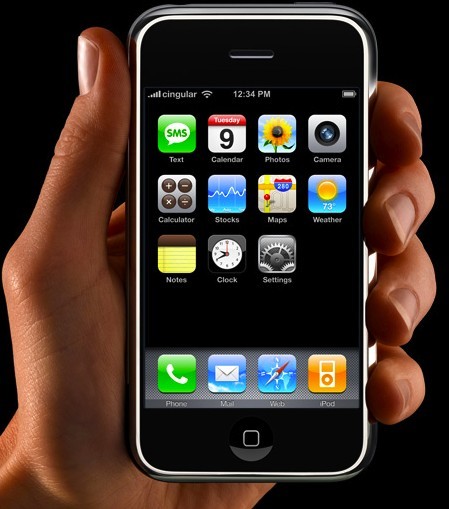
After a long wait eventually iPhone was launched in India last week. The wait has been the longest for the Indians as iPhone appeared on almost all the major markets world over before it finally landed in India. But the question is, has it been really worth the wait?
Going by the price it carries in US, if you were to buy it in India you'll end up paying close to three times more as upfront cost. Well, it's true that the way it is offered in US with service provider's related schemes and all may eventually bring the cost of owning an iPhone at almost the same level in US and India.
But what is interesting is the fact that people in India are more comfortable paying in smaller installments than in big down payments. Still people who launched iPhone seem to think differently. May be they are right may be not. Only time will tell. But one of the reasons behind the exceptional surge in growth of white goods' industry market in India has been the easy payment options.
Even if we concentrate only on the mobile market, most of the high end models became popular in terms of sales only after the prices were lowered. So, it's any body's guess where things might be headed.
Yes, one thing is for sure. If they want it to be some thing of an exclusive gadget for the rich and powerful only, than they have hit the jackpot (only limited, of course). And may be the plan is to subsequently lower the prices as is always done with new technology and products. In such a scenario it might happen that eventually you can get a cheaper iPhone in India than anywhere else.
And of course, there are many big mobile players in India which can't be expected to sit quietly. After all high end or low end, it's their market and they have been the rulers here. And signs are already there with many new models being launched by all and sundry to take on iPhone. But I guess they have a disadvantage vis-à-vis iPhone, I mean people want to buy it 'cause it is iPhone and can there product beat that.
The last but not the least issue is, ok fine the iPhone is out. Now what about the services that it actually was designed to offer its owners? It’s a 3G phone but we don’t have those services in India. To me the best way to judge the success of iPhone would be in terms of better services to customers. As the situation is in Indian telecom market, well it leaves a lot to be desired. All I can say to the proud owners on iPhone in India is, 'Happy iPhoning' and to the rest, just keep your fingers crossed.
Written by: Rohit Mishra
Tuesday, August 26, 2008
6 ways to hold yourself accountable to a fitness routine
A lot of good things can be said about motivation when it comes to sticking to a regular fitness routine. Motivation makes us feel mentally pumped-up; it energizes; it's about seeing physical results and wanting to go even harder and faster. But motivation is impossible to sustain 24 hours a day, every day. When your alarm goes off before the sun rises and the very last thing you want to do is get out from your bed.
Accountability is what gets you out of bed at 5am for a morning run when you know your friend is waiting for you. It causes you to do things like fill out exercise and nutrition logs, so you can go back and look at your progress and make sure you’re staying on track with your goals.
People are much more likely to stick with something if they hold themselves accountable in some way. For some it can be as simple as making a decision and telling a friend they're serious about sticking to it -- but could that friend please check in once in a while, just to make sure they're staying on track? Other people need something more structured. Me? I can go both ways, depending on the goal. With certain things, I have no problem sticking to my plan -- but with other things I do much better if I have backup.
A good example of something I need to hold myself accountable to is my 101 Things list. (Maybe because it's a long-term goal, and not something I work on every day or a certain amount of time per week?) I hold myself accountable to completing the things on my list by writing monthly updates, no matter what.
Here are 6 ways to hold yourself accountable:
1. Use a website or a journel to track your exercise and food. It’s convenient and easy to use. It’s also helpful to see changes made over time.
2.Keep a running calendar on your wall, as it gives a great motivation and checks your daily routine as you would hate to see blank spots so it motivates you to have none
3. Hire a personal trainer
Knowing that someone is going to meet you at a particular time, kick your butt, and you’re paying them to do it? Sounds like a great way to hold yourself accountable!
4. Sign up for a class/camp. Trying an aerobics camp for 6 weeks, or an 8-week dancing class?
5. Work out with a friend or partner. There are certain situations where it’s nice to have company.
6. Establish your own fitness rules according to your preference and availabilty, whether its cycling, running, jogging, playing with weights etc.
Written by: Neha Gupta
Accountability is what gets you out of bed at 5am for a morning run when you know your friend is waiting for you. It causes you to do things like fill out exercise and nutrition logs, so you can go back and look at your progress and make sure you’re staying on track with your goals.
People are much more likely to stick with something if they hold themselves accountable in some way. For some it can be as simple as making a decision and telling a friend they're serious about sticking to it -- but could that friend please check in once in a while, just to make sure they're staying on track? Other people need something more structured. Me? I can go both ways, depending on the goal. With certain things, I have no problem sticking to my plan -- but with other things I do much better if I have backup.
A good example of something I need to hold myself accountable to is my 101 Things list. (Maybe because it's a long-term goal, and not something I work on every day or a certain amount of time per week?) I hold myself accountable to completing the things on my list by writing monthly updates, no matter what.
Here are 6 ways to hold yourself accountable:
1. Use a website or a journel to track your exercise and food. It’s convenient and easy to use. It’s also helpful to see changes made over time.
2.Keep a running calendar on your wall, as it gives a great motivation and checks your daily routine as you would hate to see blank spots so it motivates you to have none
3. Hire a personal trainer
Knowing that someone is going to meet you at a particular time, kick your butt, and you’re paying them to do it? Sounds like a great way to hold yourself accountable!
4. Sign up for a class/camp. Trying an aerobics camp for 6 weeks, or an 8-week dancing class?
5. Work out with a friend or partner. There are certain situations where it’s nice to have company.
6. Establish your own fitness rules according to your preference and availabilty, whether its cycling, running, jogging, playing with weights etc.
Written by: Neha Gupta
Friday, August 22, 2008
Why does India win so few Olympic medals?

Here’s an interesting fact: despite a population of more than 1 billion, India has won a grand total of 18 Olympic medals which are mostly in field hockey.There are many obvious hypotheses, all of which may be partially right, yet one would think these apply to zillions of other countries that nevertheless have non-trivial Olympic presences.
So what is it?
My guess would be lack of government subsidies, combined with the possibility that non-democratic, authoritarian governments feel greater need to prove themselves on the international stage and to their people at home. The subsidies matter for the infrastructure as much as for the athletes. Throw in low social mobility, nutrition problems, and the relative lack of TV to inspire the young 'uns and you've got my answer. the mentality of Indians or lack of spirit for sports.
The population explosion has increased the opportunity cost of pursuing sports as a career. To excel at any sport, it is necessary to dedicate yourself to it for years. If today, a kid decides to pursue a sport full time, down the line he/ she will not have the opportunity to catch up with the other kids who have been busy studying advanced math etc that would train them to be doctors or engineers. It is only the best of the lot that end up having well paying jobs. India has abt 50 million people who are unemployed right now. It is more than likely that he/ she will end up working a job that barely pays enough to support a family.
In India, sports is not given any chance. It is culture , i think. When a kid shows some interest in sports, parents stop him "Hey, only if you study well, u can earn lot". Cricket is the only "paying" sport right now in India and i see lot of parents encourage cricket "interest" in children. Other sports don't have bright future in India.Also, for many individuals, it is a question of survival. The population has made the race to the top extremely competitive and the criteria for measurement is the kid's aptitude in math/sciences for the most part. Sports are meant only for recreation - that too if you have some time left over from studying.
People will invariably argue that China has been excelling at Olympics despite its population being larger than India's. They should not forget the emphasis that the Government of China places on good showing at that stage. This is severely lacking in India.
Population is an important reason for the poor showing, but hardly the only one.
If a nation struggles to feed its people on a daily basis, lacks proper roads and sanitation, training an Olympic-caliber athlete in any sport becomes more challenging than the actual Games.
We're culturally obsessed with a lot of things, but nobody I've ever met is so obsessed with everything. Some do love sports, where sometimes people make headlines for their obsession. But the same happens when people become obsessed with money, drugs or even religion to some degree. People will always be around to criticize the hobbies of others, but isn't that the right attitude.
Written by: Neha Gupta
Thursday, August 21, 2008
Musharraf's roller coaster ride

One of the most prominent faces in the media over last decade or so has been the man with multiple roles, Pervez Musharraf. The reason why he was every where in media was perhaps his own doing or his reaction to events around him or it was the need of the circumstances to put him there, this is something to be debated over and over again. Perhaps it was the love of media or hatred or they were just doing their job but for sure he remained in the limelight all through the decade.
He had been naughty and adventures always. I don’t think many people know that during his days in army, as a matter of fact it was during his initial training he came very close to being shunted out of the army. Just imagine if that had happened how different things would have been today in Pakistan. But that was not to be.
Having followed world affairs in general and Indian in particular, I have quite closely kept track of Musharraf’s rollercoaster ride.
It is very interesting that the man who made Musharraf the Army Chief was the one he ousted in the famous bloodless coup of 1999. It’s even more amusing that the same man is closely involved in Musharraf’s ouster now.
For Indians Musharraf became a household name after our Kargil victory. After that he has managed to stay in the news come what may. And as things turned out in Afghanistan first and Iraq later, Pakistan surprising became an important alley in the ‘war against terrorism’ and Musharraf the darling of America. It goes to his credit that he used the circumstances to his advantage and turned himself from an army chief to CEO (very interesting) and later President (sometimes all simultaneously).
But like they say ‘only thing constant in this world is change’ and they don’t say it just for fun. The circumstances changed world over and in Pakistan. He himself allowed, as the events demanded, two ex PM’s to return back and took some nasty decisions including sacking the judges and the Red Mosque fiasco.
The end result was he had to quit, something he must have never thought he’ll end up doing. The darling of America all of sudden became an internal matter of Pakistan for US. In any case in a rollercoaster ride there are ups and down and eventually you come down and usually at the same spot where you had started.
Musharraf after a decade in headlines may be lost in oblivion. One thing still left to be seen is that many in Pakistan and the world don’t think of him as anything more than a dictator. Will he meet the same fate as others before him or future has something else in store for him. Well, all that we can do is wait and watch.
Written by: Rohit Mishra
Tuesday, August 19, 2008
Shopping Madness

I love to shop. Always have. I’m not sure where I get it from, because no one in my family is a shopping spree. But somehow I inherited the shopping gene. Unfortunately, that gene is at odds with a small budget so frequently the joy of shopping is pared with the guilt of spending money. But no longer! Over this summer ie the time when I started working the first time in my life and did’t get paid regularly, but still I shopped like a mad. I checked out all the malls near my apartment. One is not so good, but the other, oh it’s awesome. I spend hours in the Shipra Mall this weekend, most of it the 1st floor where shoppers stop, Meena Bazaar, Globus and CTC are. They have the most amazing selection of dress material I’ve ever seen at a store. Ohh! these are the perks of living in a brainy city and so cheap as sale is at its peak.
I have been the one to hit the mall and shopping store the day after Independence day. Its all about the craziness. It always made way more sense to wait until a more reasonable time to shop. I know there are some great deals for those willing to shop early in the morning before10 am, but I also know good deals can be found year 'round if you know where to look. For example, smart shoppers buy the branded items in the sale season to find the best bargains.
After having done with my shopping, I then noticed the line of people wanting to enter the mall as the queue was just before the mall entrance. As I walked out of the mall, I was amazed to see the line continue back further and further. I reached towards the end and the line continued, making a curve to the right in order to accomodate more people.
There were at LEAST 75 people waiting in line, perhaps with the number being closer to 200 or more. They were clutching DVDs, laptop, computers, home theaters and free-after-rebate recordable cd-roms. Certainly, they felt they had landed deals worth waiting for.
Hey, this is India, and I am glad to see our economy alive and kicking. You folks who braved the early morning hours and long lines are to be applauded!
But I came upon this story and was saddened by the lengths that some people will go to get that "great offer".
I have nothing more to say about it. Your comments?
Written by: Neha Gupta
Monday, August 18, 2008
IT Services and Mobile Market- The Growth Story
I just laid my hands on one of my most awaited magazines of the fortnight, Data Quest. And just leafing through it I felt quite elated. Some of the things I read seemed obvious where as some were totally unexpected. Overall it all adds up to a very strong present and a very positive future. Let’s concentrate on two things, one that affects the sector I work in (IT consultancy) and the other that affects us all (mobile market).
The first thing that struck me was that the growth rate of IT domestic market has been higher than exports. For many years one thing that has plagued our country’s economy has been the approach of looking for an export led growth. Though sound economics demands that it should be GDP led exports and not the other way around. Thankfully in one sector we can proudly claim that the growth is leading the exports and that actually points towards a great future for the IT market. But yes, my sincere hope is that this is not a one time aberration in IT market and it spreads to other sectors as well.
What is even more heartening is that within domestic market there are more than half a dozen deals each worth Rs 100 crores or more. Another good thing is that most of these deals are for the Govt and Public sector firms, which implies that we can expect to see better efficiency in services offered by one segment that affects us all, Govt services.
Though the most notable buy out of last year was Wipro buying Infocrossing, there have been many other M&A’s which obviously were not as big as this one but were no less significant. Though what is less surprising is that almost all these deals involve US market, which considering its size and importance seems like the most sensible thing to do.
Above all the sweetest music to our ears i.e. my company (as you know we are IT strategic consultants specializing in IMS), is the fact that within IT services exports the fastest growing segment is Infrastructure Services with a growth rate of more than 125%. But to be honest, having been in the business of offering IT strategic consultancy for 4 years now, for us it’s more like a restatement of a fact that we have been well aware of all along. It’s but obvious that couple of deals in IMS sector have been signed which would be worth more than $1b each.
But something that affects more people, at least directly, and is closer to everyone’s heart is the mobile phones. There also great news awaits the service providers as well as the end users. A survey sometime back showed that when it comes to talking on the phone Indians spend maximum time per month talking on a cell. And the good news for telecoms is that mobile phone penetration has crossed 250mn mark. Just imagine with the number of cells in use and the untapped market still waiting to be explored, when this would combine with the time people spend talking on cell phones where would the profit of telecom firms go!
The good news for users here is that bigger market would throw in more players, better services and better deals for consumers. Also with 3G services expected to be started anytime soon and expected launch of iPhone next week, users can really look forward to an early Diwali.
Written by: Rohit Mishra
The first thing that struck me was that the growth rate of IT domestic market has been higher than exports. For many years one thing that has plagued our country’s economy has been the approach of looking for an export led growth. Though sound economics demands that it should be GDP led exports and not the other way around. Thankfully in one sector we can proudly claim that the growth is leading the exports and that actually points towards a great future for the IT market. But yes, my sincere hope is that this is not a one time aberration in IT market and it spreads to other sectors as well.
What is even more heartening is that within domestic market there are more than half a dozen deals each worth Rs 100 crores or more. Another good thing is that most of these deals are for the Govt and Public sector firms, which implies that we can expect to see better efficiency in services offered by one segment that affects us all, Govt services.
Though the most notable buy out of last year was Wipro buying Infocrossing, there have been many other M&A’s which obviously were not as big as this one but were no less significant. Though what is less surprising is that almost all these deals involve US market, which considering its size and importance seems like the most sensible thing to do.
Above all the sweetest music to our ears i.e. my company (as you know we are IT strategic consultants specializing in IMS), is the fact that within IT services exports the fastest growing segment is Infrastructure Services with a growth rate of more than 125%. But to be honest, having been in the business of offering IT strategic consultancy for 4 years now, for us it’s more like a restatement of a fact that we have been well aware of all along. It’s but obvious that couple of deals in IMS sector have been signed which would be worth more than $1b each.
But something that affects more people, at least directly, and is closer to everyone’s heart is the mobile phones. There also great news awaits the service providers as well as the end users. A survey sometime back showed that when it comes to talking on the phone Indians spend maximum time per month talking on a cell. And the good news for telecoms is that mobile phone penetration has crossed 250mn mark. Just imagine with the number of cells in use and the untapped market still waiting to be explored, when this would combine with the time people spend talking on cell phones where would the profit of telecom firms go!
The good news for users here is that bigger market would throw in more players, better services and better deals for consumers. Also with 3G services expected to be started anytime soon and expected launch of iPhone next week, users can really look forward to an early Diwali.
Written by: Rohit Mishra
Thursday, August 14, 2008
Beijing Olympics have been most expensive so far
The Beijing Olympics is slated to define the future moments for China as its been the most expensive Olympics so far in the world. It would be a lesson for India, which is gearing up to host the Commonwealth Games in 2010.
Both the emerging economies, India and China, compete with each other, having a population of over one billion. The political systems are different in the two counties, with India having a multi-party democracy and China having a one-party rule. The direction of the change in China was clear from the XXIX Olympics Games in Beijing. China wants to wed its past glory with its modern achievements.

At the opening ceremony of the Olympics at the Bird’s Nest Stadium on August 8, an army of 2,008 drummers chanted Confucius’s sayings—“Friends have come from a far, how happy we are”. The time chosen for inauguration was 8.08 pm Chinese time, as Chinese consider number eight to be auspicious, which brings wealth, prosperity and fortune.
China has invested over $45 billion on the event. According to some estimates it would be $70 billion, making Beijing Olympics the costliest so far. In the last Olympics in Athens in 2004, Greece invested $15 billion.
The inauguration witnessed 29,000 traditional fireworks and dance performances depicting ancient Chinese maritime adventure, silk-route trade and martial art by about 14,000 performers, including school children. With about seven million tickets sold, the event has a participation of 10,500 athletes from 204 countries in 308 disciplines from 38 sports.
The most spectacular scientific achievement came to the fore when the Chinese government fired a volley of rockets in the sky to disperse rain-causing clouds on Saturday—the largest such operation in China and first such operation in an Olympic event so far.
Written by: Neha Gupta
Both the emerging economies, India and China, compete with each other, having a population of over one billion. The political systems are different in the two counties, with India having a multi-party democracy and China having a one-party rule. The direction of the change in China was clear from the XXIX Olympics Games in Beijing. China wants to wed its past glory with its modern achievements.
At the opening ceremony of the Olympics at the Bird’s Nest Stadium on August 8, an army of 2,008 drummers chanted Confucius’s sayings—“Friends have come from a far, how happy we are”. The time chosen for inauguration was 8.08 pm Chinese time, as Chinese consider number eight to be auspicious, which brings wealth, prosperity and fortune.
China has invested over $45 billion on the event. According to some estimates it would be $70 billion, making Beijing Olympics the costliest so far. In the last Olympics in Athens in 2004, Greece invested $15 billion.
The inauguration witnessed 29,000 traditional fireworks and dance performances depicting ancient Chinese maritime adventure, silk-route trade and martial art by about 14,000 performers, including school children. With about seven million tickets sold, the event has a participation of 10,500 athletes from 204 countries in 308 disciplines from 38 sports.
The most spectacular scientific achievement came to the fore when the Chinese government fired a volley of rockets in the sky to disperse rain-causing clouds on Saturday—the largest such operation in China and first such operation in an Olympic event so far.
Written by: Neha Gupta
Wednesday, August 13, 2008
Riding an Auto rickshaw in Delhi - My Experiences
Once you are out of the phase where the main concern is about getting an auto, fare negotiations, traffic hassles and the like, you enter a phase where you start appreciating the fact that you are in the company of a person you hardly care to know but someone who still teaches you a lot. Over the last couple of months I have started spending my auto travel time in observing the drivers. And what I have deciphered is something I find very amusing. I am definitely not trying to be judgmental or anything, I am incapable of passing judgment on others. I am only trying to jot down the events as they were.
There are numerous types of auto drivers. Let’s begin to understand them and their idiosyncrasies. And then we can move on to particular interesting cases.
One of the rare types is the absolute quiet ones. You tell them your destination, they just start their meter, you reach your destination, you pay the fare and he is gone. These are the silent journeys. All you get to know about the guy is that you don’t know anything him.
Then there are some who talk a lot. They are so happy and preoccupied talking that they don’t even care if anyone is listening. For them more important is to speak their heart out without wondering where the monologue is headed. Journey with them is not very enjoyable or at least is not for the whole path. Even if they have something interesting to share it is lost in the excess information they are providing.
Then there are others who lie somewhere in between these two. Some are closer to former and some to latter.
Among the rest what is fascinating is not how much they talk but it’s what they talk about. Some are political commentators, some cricket enthusiasts, some socially concerned, some indifferent towards everything, and some, well they are of every possible type. So let me take you through some of the very interesting ones I have met.
One of the most interesting ones I met, an incident that to some extent gave me the idea of sharing my experiences, was a person who has lived the history in Delhi. He has been driving the auto for like always. He shared his experiences with me that included being there to pay homage to Pt Nehru when he passed away. He vividly remembered standing just next to Indira Gandhi and crying that day.
He started driving an auto when there were less than 100 autos in whole of Delhi. We all know about the fare related problems with autos. But look at the world as it was then. He once took a passenger from ISBT Kashmere Gate to Khanpur then. The fare was only 3 rupees. Now very few people used autos then and once he reached Khanpur the passenger gave him Rs 5 saying that he knew he won’t get any passenger back. Can that happen today?
There is a temple on Shankar Road (SR) which looks quite new from the looks of it. But to my utter surprise that temple is more than 40 years old; of course it has been redone now.
People used to avoid using SR late at night then as people do today not because of traffic as is the case now but because what is New Rajinder Nagar now was a thick jungle full of wild animals and the road used to be pitch dark.
He talked about so many things. He felt so happy when he remembered those times of very few vehicles, no traffic jams, and of helping and trusting people. He had memories of Asian Games to share and of leaders & politicians of high stature he had listened to addressing rallies. He has seen face of Delhi getting done and redone and changing to a figure he can hardly recognize. But still he looked at all those changes in a very positive manner; he believed strongly that we are moving forward.
To me that ride was very enriching experience. Listening to a man talk so passionately about all those things, well the rides in autos in Delhi are definitely a worthwhile experience.
Written by: Rohit Mishra
There are numerous types of auto drivers. Let’s begin to understand them and their idiosyncrasies. And then we can move on to particular interesting cases.
One of the rare types is the absolute quiet ones. You tell them your destination, they just start their meter, you reach your destination, you pay the fare and he is gone. These are the silent journeys. All you get to know about the guy is that you don’t know anything him.
Then there are some who talk a lot. They are so happy and preoccupied talking that they don’t even care if anyone is listening. For them more important is to speak their heart out without wondering where the monologue is headed. Journey with them is not very enjoyable or at least is not for the whole path. Even if they have something interesting to share it is lost in the excess information they are providing.
Then there are others who lie somewhere in between these two. Some are closer to former and some to latter.
Among the rest what is fascinating is not how much they talk but it’s what they talk about. Some are political commentators, some cricket enthusiasts, some socially concerned, some indifferent towards everything, and some, well they are of every possible type. So let me take you through some of the very interesting ones I have met.
One of the most interesting ones I met, an incident that to some extent gave me the idea of sharing my experiences, was a person who has lived the history in Delhi. He has been driving the auto for like always. He shared his experiences with me that included being there to pay homage to Pt Nehru when he passed away. He vividly remembered standing just next to Indira Gandhi and crying that day.
He started driving an auto when there were less than 100 autos in whole of Delhi. We all know about the fare related problems with autos. But look at the world as it was then. He once took a passenger from ISBT Kashmere Gate to Khanpur then. The fare was only 3 rupees. Now very few people used autos then and once he reached Khanpur the passenger gave him Rs 5 saying that he knew he won’t get any passenger back. Can that happen today?
There is a temple on Shankar Road (SR) which looks quite new from the looks of it. But to my utter surprise that temple is more than 40 years old; of course it has been redone now.
People used to avoid using SR late at night then as people do today not because of traffic as is the case now but because what is New Rajinder Nagar now was a thick jungle full of wild animals and the road used to be pitch dark.
He talked about so many things. He felt so happy when he remembered those times of very few vehicles, no traffic jams, and of helping and trusting people. He had memories of Asian Games to share and of leaders & politicians of high stature he had listened to addressing rallies. He has seen face of Delhi getting done and redone and changing to a figure he can hardly recognize. But still he looked at all those changes in a very positive manner; he believed strongly that we are moving forward.
To me that ride was very enriching experience. Listening to a man talk so passionately about all those things, well the rides in autos in Delhi are definitely a worthwhile experience.
Written by: Rohit Mishra
Tuesday, August 12, 2008
Sing is Kinng- a piece of trash

What would you expect from a film whose story is derived from the title instead the other way round? Well, since Akshaya Kumar is there, I expected it to be a good comedy. Instead, it is a no brainer movie. The movie doesn't have a script at all and the entire cast and crew looked confused about what they wanted to show to the audience. Sometimes, it seems like a comedy, sometimes a movie with a message, but in the end it turns out to be a big joke on you.
Singh is Kinng has the disgrace of not having a single reedeming element in the entire 2hrs 10min of its screen time. The movie starts with Lucky Singh ie King (of Australian underworld) being attacked on his birthday and Lucky played by Sonu Sood catching the killer by performing a gravity defying stunt. The scene is shifted to Punjab where Happy Singh (Akshay) is making everyone's life miserable by trying to help them. All the villagers decide to get rid of Happy by sending him on a mission to bring Lucky back to his home. Happy on his mission to bring lucky back meets Sonia (Katrina) and ends up becoming the new King.
Entire movie is full of crap except only a couple of good scenes (which actually made me laugh) in the entire 2 hrs runtime. Most of the scenes don't even make sense like why Puneet's father resembled Mika (King's brother), sudden change in every character in the King's gang, well there are plenty such loopholes.
There is no story in the movie to talk about. In the end, when it comes to making movies, script is King and not Singh, in this case there is no king only a bunch of Jokers. This movie does not deserve anything and I think Rs 200 is huge price to pay to watch silly jokes. It's not a fair deal. Singh is Kinng is a worthless piece of trash that is so pathetic even by Bollywood’s contemptible standards.
Written by: Neha Gupta
Monday, August 11, 2008
My experiences of riding an auto rickshaw in Delhi
Commuting to office for many people in Delhi involves encounters with autos and auto drivers daily. It’s a whole lot of different and interesting experience in itself. I really enjoy meeting a different person everyday doing the same job but in his own way. Well, I only get to meet one driver because I use auto only to go to the office. On my journey back I use the combo of infamous Blueline buses and famous Delhi Metro. Still that adds up to more than 20 different persons every month that drive me to office.
Before I go specifically into idiosyncrasies of drivers only, lets enjoy the overall phenomenon of daily commuting by auto.
Stage I:
My daily journey begins with its own share of excitement on most of the days and a little frustration on some of the days. I first have to place myself tactically to get the auto at the earliest considering I take the auto from a road as busy as Shankar Road and from a station like Old Rajinder Nagar from where many working class people hire auto for the office at the same time. And I feel everyone there knows everyone else who is going to hire an auto. It’s a fun to watch every one judging for oneself where to stand to outsmart the other. The off day here is when I keep standing there for a long time (more than 10 mins) without being able to beat my fellow riders to an early auto.
Stage II:
Now the time comes when an auto driver stops his auto right in front of u. After having outsmarted the people I don’t even know for real, I find myself at the mercy of the person that changes everyday. First grace that he does to me is agreeing to take me to my destination, i.e Kailash Colony.
The next thing is something all auto commuters in Delhi get charged up on, the FARE. One good thing here is that though the auto drivers of Delhi are very much disliked when it comes to ‘pre-deciding’ the fare or going by ‘meter’ yet when they see a person in formals, looking like someone going to office, well no questions asked. They just start their meter and I m on my way.
Stage III:
The next issue is about the exact road that will be taken to get to the destination. Those who use this mode of transport in Delhi know very well that how harassing that can be. But that again is not a problem with me because they understand that I must know the way as I m a daily commuter. But one thing that does surprise them is that the path that I ask them to follow is not the shortest one. Well, I have my reasons for that. We’ll come to that later. Here the way the driver drives decides whether it would be a day of excitement or of frustration for me.
Stage IV:
The drive from my residence to office is more than 15 kms and the time taken is approx 35 mins in auto. And that’s a sizable duration in the sense that besides the people I otherwise come in contact with daily, viz. my roomie, couple of friends and colleagues, the auto driver is the only one that I interact with on a daily basis and that too with a new guy everyday.
Though all these stages are enjoyable but are routine phenomena, the one that’s most interesting is the variety of personalities (drivers) that I get the opportunity to interact with. They all are similar in the sense that they are doing the same job, have had more or less the similar experiences, and I m assuming have similar life style, etc but still there are marked differences, and that all shows every morning when I m coming to the office. When I’ll share my experiences while riding an auto in Delhi, I m sure you’ll agree that how interesting their experiences, insights, attitudes, outlook and everything else are.
Written by: Rohit Mishra
Before I go specifically into idiosyncrasies of drivers only, lets enjoy the overall phenomenon of daily commuting by auto.
Stage I:
My daily journey begins with its own share of excitement on most of the days and a little frustration on some of the days. I first have to place myself tactically to get the auto at the earliest considering I take the auto from a road as busy as Shankar Road and from a station like Old Rajinder Nagar from where many working class people hire auto for the office at the same time. And I feel everyone there knows everyone else who is going to hire an auto. It’s a fun to watch every one judging for oneself where to stand to outsmart the other. The off day here is when I keep standing there for a long time (more than 10 mins) without being able to beat my fellow riders to an early auto.
Stage II:
Now the time comes when an auto driver stops his auto right in front of u. After having outsmarted the people I don’t even know for real, I find myself at the mercy of the person that changes everyday. First grace that he does to me is agreeing to take me to my destination, i.e Kailash Colony.
The next thing is something all auto commuters in Delhi get charged up on, the FARE. One good thing here is that though the auto drivers of Delhi are very much disliked when it comes to ‘pre-deciding’ the fare or going by ‘meter’ yet when they see a person in formals, looking like someone going to office, well no questions asked. They just start their meter and I m on my way.
Stage III:
The next issue is about the exact road that will be taken to get to the destination. Those who use this mode of transport in Delhi know very well that how harassing that can be. But that again is not a problem with me because they understand that I must know the way as I m a daily commuter. But one thing that does surprise them is that the path that I ask them to follow is not the shortest one. Well, I have my reasons for that. We’ll come to that later. Here the way the driver drives decides whether it would be a day of excitement or of frustration for me.
Stage IV:
The drive from my residence to office is more than 15 kms and the time taken is approx 35 mins in auto. And that’s a sizable duration in the sense that besides the people I otherwise come in contact with daily, viz. my roomie, couple of friends and colleagues, the auto driver is the only one that I interact with on a daily basis and that too with a new guy everyday.
Though all these stages are enjoyable but are routine phenomena, the one that’s most interesting is the variety of personalities (drivers) that I get the opportunity to interact with. They all are similar in the sense that they are doing the same job, have had more or less the similar experiences, and I m assuming have similar life style, etc but still there are marked differences, and that all shows every morning when I m coming to the office. When I’ll share my experiences while riding an auto in Delhi, I m sure you’ll agree that how interesting their experiences, insights, attitudes, outlook and everything else are.
Written by: Rohit Mishra
Friday, August 08, 2008
Money Flashing in Parliament- the Real Issues

The sight of money being flashed in the Parliament generated varied emotions among the masses and political commentators. New ebb in the democracy; mockery of the political system; was this the dream of our freedom fighters? so on and so forth. But honestly, do we really care? Aren’t we the same people who have voted those 500+ wise men to be there, to do what they were doing that day. Would we not vote most of them back as and when we’ll be obliged to?
And to be frank except for the newness of putting forth the fact that our politicians are by and large corrupt what else does it signify? Definitely not, that we as a nation have failed ourselves.
Well as far as I am concerned, fortunately or unfortunately, I was more or less unmoved by the fact that ‘politicians flashed bundles of bribe money in parliament’ supposedly given to them to cross vote. What bothered me was something else. Numerically, the numbers that parties have, the whips they had issued and the side they said they were on didn’t show in the final vote. Money or no money, we have a system where parties have MPs sent to Parliament who don’t agree to their party’s stand on such crucial issues. And I don’t want to enter into the debate on democracy and freedom of speech of MPs.
Whether this nuclear deal will solve our energy problems or not is not the issue I want to go into right now. And to be frank, I personally believe this deal in not just about the energy needs or the like, but that’s not the thing to be talked of as of now.
There are significant other issues involved here. First the MPs who were offered bribe what should have been their duty, bring the money to the august house to flash it or inform the police about the bribe giver. What they did, does that amount to having accepted the bribe? Second even more disturbing to me was whether the senior party leaders of those MPs’ aware of the whole show. If yes, God save us! For those people would be the decision makers for the whole country and not just the party- a job they don’t seem to be very good at.
If they weren’t, then again its serious issue as they have people in their ranks who can do this kind of drama without even bothering to inform them. It seems that perhaps their party MPs don’t believe that they are capable of taking the right call in an issue as important as this was.
Or, may be their MPs don’t give a damn.
Fortunately and as the conventions demand, a committee has been formed and has got into action already and very soon we’ll know the real picture. But would we ever get to know the role played by senior party leaders in whole money flashing episode? Would our political parties ever base their judgment on what’s best for the country and the people instead of, well only God knows what? And would our leaders rise above party politics and put nation before them?
Well, I know I am getting carried away too far and am asking for too much. It’s been six decades now. So, may be I’ll do what we are all used to doing, keep my fingers crossed with a prayer on the lips waiting to see how things unfold and stare into future and eventually do, well…. Do you have any workable solution for all of us??? I am still clueless.
Wtritten by: Rohit Mishra
Thursday, August 07, 2008
Irony of the English football

Finally, after 44 years of long drought, Spain won something big. The UEFA EURO 2008 Championships!! 16 nations fought hard to declare their supremacy at Europe’s biggest stage. It was not a surprise when Spain came out on top by some scintillating display of attractive & breathtaking football. The surprises were teams like Russia & Turkey who reached the last four stage surpassing teams like Italy, Netherlands, France, Croatia, etc. But perhaps the biggest surprise was the absence of England from the championship. Or was it?
If we look at the last four years of club football, it has been dominated by English clubs. In 2005, Liverpool won the Champions League by beating AC Milan in one of the best matches ever played at a night which no football fan will ever forget. Then in 2006, Arsenal reached the finals but eventually losing to the winners, Barcelona. 2007 saw three teams from England reach the semi-finals stage. In 2008, all the four clubs reached the quarter-final stage. But in spite of all this English domination in Europe, the national team didn’t qualify for Euro 2008.
So why is it that a nation so powerful in the UEFA Champions League can only be spectator in Euro 2008? Why can't they qualify when they have so many world class players and managers in their league? The answer lies within the nationality of those world class players and managers. Take a look at the nationality compositions of the 4 clubs that made it through the quarter final, how many of them can be defined as "English"? They had 4 clubs and none of them was managed by an England manager, the closest thing that comes to an England manager is Alex Ferguson and he is Scottish by nationality. Theo Walcott is the only top English player in the Arsenal squad, and he even doesn't have a regular first team football. Liverpool only has 2 English players as regular starters: Steven Gerrard and Jammie Carragher, the same for Chelsea.
With so many foreigners, I don't think it's fair to say that those who were involved in the quarter final can be called as "English team", they should be called a "Global and EU teams who use England as their base" team!!
The EPL always claim themselves as the best league in the world, both in the aspect of quality of play and business which is something I agree about. The EPL always perform quite high quality level every week with fans spread throughout the world. League competition is a way to produce a strong national team, a team that can bring joy and dignity to every it's citizen. The FA should do more evaluation about their system of competition. What's the point of having the so called best league in the world when you don't have a strong national team?
Written by: Digvijay Singh
Wednesday, August 06, 2008
Gay Marriages on the rise in India

The number of gays entering into wedlock in Goa is on the rise and groups working for homosexual rights are demanding legal cover for such marriages.
"It's heartening to note that gays are getting acceptance from their families... this is happening for the first time in the state which saw first gay marriage three years back," Vishant Chodankar, trustee, Humsaath Trust, a non government organisation working for gays. "Fearing social stigma and discrimination, we had to conduct all these marriages in a clandestine manner," he said.
A few years ago, a renowned male fashion designer based in Goa solemnised his marriage to his male partner. It was recorded as the first gay marriage in India. Chodankar, who is himself married to a male partner, feels loyalty in gay marriages is much more than in conventional marriages.
"They are ready to come out in public with their relationship if there is social acceptance," Chodankar said.
The NGO is the only body working for gay rights. It is worried about high susceptibility to sexually-transmitted diseases among gays. Referring to the demand for legalising gay marriages, he said, "Gay couples cut across the age group of 18 to 50 years. We need the government's help to legalise such an institution," he added. Gay marriages in India, which hitherto lack social acceptance are now getting support from unexpected quarters -- respective families.
Social conservatives and others who oppose same-sex unions assert that marriage between a man and a woman is the bedrock of a healthy society because it leads to stable families and, ultimately, to children who grow up to be productive adults. Allowing gay and lesbian couples to wed, they argue, will radically redefine marriage and further weaken it at a time when the institution is already in deep trouble due to high divorce rates and the significant number of out-of-wedlock births. Moreover, they predict, giving gay couples the right to marry will ultimately lead to granting people in polygamous and other nontraditional relationships the right to marry as well.
Written by: Neha Gupta
Monday, August 04, 2008
How Important is Virtualization?
Virtualization may seem like a technology coming into vague for last few years only, but in reality has been used in some form or the other since 1960s. It was in that very decade when IBM started working on virtualization. And since then it has expanded to different aspects of IT in varying degrees.
Virtualization basically is a framework/methodology of dividing the different resources of a computer system into multiple execution environments. For a common man the term may sound confusing or intimidating at times. But what every user doesn’t realize is that in a very crude form we all have been using virtualization on our work stations. Take the example of partitioning the hard disk into multiple drives/sectors. Another easy example would be a technology that allows you to run a number of operating systems on a system, simultaneously. It’s nothing but virtualization at work. But of course it’s not that simple always.

Virtualization may make a single resource look like many or may make multiple resources look like a single resource. The good thing is that it ensures that every piece of hardware can be made to work to the best of its capabilities.
Virtualization at times is used synonymously with server virtualization as servers are the components where it has been used most extensively so far. Server virtualization has in fact become very wide spread. Though initially it was being applied on main frames only but of late it has entered the domain of SME’s also.
But virtualization is not something that can and should be confined to single component i.e. servers only. It can and is being used in different components like storage, desktop, applications, etc. Numerous studies have shown that best results of virtualization are obtained when server virtualization is coupled with storage virtualization. And this fact has gained a lot of currency in the market. The market is now flooded with solutions for not just server virtualization but also storage and desktop virtualization.
But if everyone is talking about virtualization and adopting it then there must be strong reasons behind it. And that’s precisely the case. Virtualization when applied to IT components offers vast variety of benefits to the CIO’s. To list a few, it results to:
· Lowered TCO
· Quick ROI
· Better utilization of existing resources
· Reduced number of servers
· Better storage management
· Increased DR/BC capabilities
· Improved power efficiency
The list can go on and on but the main point is that virtualization has offered a near panacea to many problems a CIO faces today. It offers the CIO a way out of the financial constraints and performance issues. And if we look closely it’s obvious that virtualization is not useful to the IT operations and services only but is a boon to the whole business line that at some level makes use of the IT services.
Written by: Rohit Mishra
Virtualization basically is a framework/methodology of dividing the different resources of a computer system into multiple execution environments. For a common man the term may sound confusing or intimidating at times. But what every user doesn’t realize is that in a very crude form we all have been using virtualization on our work stations. Take the example of partitioning the hard disk into multiple drives/sectors. Another easy example would be a technology that allows you to run a number of operating systems on a system, simultaneously. It’s nothing but virtualization at work. But of course it’s not that simple always.

Virtualization may make a single resource look like many or may make multiple resources look like a single resource. The good thing is that it ensures that every piece of hardware can be made to work to the best of its capabilities.
Virtualization at times is used synonymously with server virtualization as servers are the components where it has been used most extensively so far. Server virtualization has in fact become very wide spread. Though initially it was being applied on main frames only but of late it has entered the domain of SME’s also.
But virtualization is not something that can and should be confined to single component i.e. servers only. It can and is being used in different components like storage, desktop, applications, etc. Numerous studies have shown that best results of virtualization are obtained when server virtualization is coupled with storage virtualization. And this fact has gained a lot of currency in the market. The market is now flooded with solutions for not just server virtualization but also storage and desktop virtualization.
But if everyone is talking about virtualization and adopting it then there must be strong reasons behind it. And that’s precisely the case. Virtualization when applied to IT components offers vast variety of benefits to the CIO’s. To list a few, it results to:
· Lowered TCO
· Quick ROI
· Better utilization of existing resources
· Reduced number of servers
· Better storage management
· Increased DR/BC capabilities
· Improved power efficiency
The list can go on and on but the main point is that virtualization has offered a near panacea to many problems a CIO faces today. It offers the CIO a way out of the financial constraints and performance issues. And if we look closely it’s obvious that virtualization is not useful to the IT operations and services only but is a boon to the whole business line that at some level makes use of the IT services.
Written by: Rohit Mishra
Friday, August 01, 2008
The elusive infrastructure management goal
Business decision-makers today not only expect, but also demand consistent service level guarantees for key applications or services across the whole enterprise. Large-scale automation has taken place, or is set to happen in key functions of organizations. Enterprises are heavily dependent on these automation applications across functions.
If we were to critically consider options available to automate processes, we’ll find applications encompassing every function. There are ERP systems, sales and distribution modules, CRM, SCM, and a host of standard applications available to critically evaluate and implement in their respective functions. This creates an ecosystem of enterprise applications across the company.
The critical responsibility
The most important and critical responsibility of the ownership of these enterprise applications is the IT department of the organization. And within the IT function, the IT infrastructure is the most critical component due to the dependencies on the applications for each function.
An interesting part of all this is that management of the IT infrastructure is the only area which does not have a standard application available to handle processes or bring about elements of intelligence.
The available applications/tools are only point tools. But in order to manage a large IT setup, one needs to integrate multiple tools which many IT teams avoid due to the complexities of implementing and running such tools. The only way the IT teams today cope with it is by outsourcing the IT infrastructure to a third party.
Human interference
There are various infrastructure management models currently available, but these require human interference. Manual interference and the lack of consistent service management processes is still the number one source of incidents resulting in end-user downtime.
The biggest challenge
The biggest challenge for IT infrastructure managers today is unplanned and untested infrastructure change. Let’s face it: humans are not very good at repetitive tasks, so this cries out for automation.
Over the last year during my interaction with some of the top IT infrastructure managers, I was able to get an idea about the key challenges in running corporate IT infrastructure, in a country like ours with a diverse business environment. These challenges make IT infrastructure management elusive. They are:
• Multiple technologies, protocols, and vendors
• Diverse geographies and users
• Greater business demands and Moore’s Law
• A daunting environment
Increased complexities
Today, even small IT environments have many inter-related components. Complexity arises from the inter-dependencies among these components, which increase exponentially as business demands the addition of hardware and software to IT architectures.
It may be necessary to add network elements such as servers, networks, storage systems, and management systems. The organization may need to upgrade its facilities and expand the scope of processes and organizational structures.
Management and control become critical to business as the IT environment becomes more complex. With millions of inter-dependencies, many are difficult to identify, some are difficult to understand, and others are outside our domain of control. IT infrastructure management is a formidable undertaking if we can’t understand and control the inter-dependencies.
Multiple technologies, protocols and vendors
Not long ago, mission-critical systems all ran on mainframe technology. With the advent of the PC, LANs, and related technologies many business applications moved from the protected realm of the mainframe data centre to the free-flowing desktops of users.
Today’s hottest gadgets include Blackberrys, pocket PCs, Palm PCs, and other devices that connect to networks, allowing users to carry data with them.
When dealing with the architecture or systems deployment strategy, no longer are IT managers bound to use host-based configurations where a large, powerful central computer does all the processing, and users interact via dumb terminals.
In today’s client/server architectures, each computing resource can be a client, a server, or both at various times. With this architecture, the mainframe is regarded as a fat server, and the dumb terminal becomes a thin client.
Alternatively, IT managers can choose a fat client (a powerful PC) that communicates with a thin server, or a newer Web-centred or n-tier architecture. Each of these approaches present unique deployment, management, and availability challenges.
The IT industry is an apt example of a democracy. Enterprises can buy from scores of vendors whose products implement the same popular technologies and standards, and safely assume that your products will work—most of the time, at least.
But freedom can be abused, and even in the best case, it creates enormous challenges for IT professionals, who are called upon to get multi-vendor products to work together with mission-critical reliability.
Today, even small IT environments have many inter-related components. Complexity arises from the inter-dependencies among these components, which increase exponentially as business demands the addition of hardware and software to IT architectures
Diverse geographies and users
Technology is a great enabler and empowers individuals to perform equally well wherever they are. Gone are the days when all requests for computations or data manipulation would have to be submitted to the EDP. Today, nearly everyone in the organization has access to some form of computing resource.
With the growth of networks comes the challenge of managing computing resources that are physically distant from each other. In the 1960s, the IT organisation only needed to worry about its ‘glass house’—the room where its giant mainframe was protected.
Today, you must provide extensive remote-user access. Given the telecom reach today users can connect to your system via the public telephone network, rent leased lines to remote departments or offices and also connect to the Internet. Users want to work from their homes, or from wherever their jobs take them.
Managing all the varied users is a big challenge. As a result, IT professionals must ensure that their systems consider the skills, experience, and languaReaderwarege of a wider range of users than ever before.
Greater business demands and Moore’s Law
Information technology is no longer a matter of competitive advantage—it’s a matter of survival. Customers now routinely demand what were once ‘extra’ features and capabilities.
They ask questions such as, what’s your web address so I can get more information about your products? Do you have an e-mail address where I can send information about my problems or concerns? Can I do business with you electronically, and do away with all these paper forms? Can I access my bank account from the Internet?
Anybody who follows the IT industry can attest to the fact that the rate of new product developments is growing exponentially. Businesses once went several months without new product announcements. Now, not only do businesses introduce new products (or versions of their products) more often, but many more businesses are involved.
In addition to this, the biggest factor driving this industry is Moore’s law and with possibilities of technology deployment increasing manifold the challenges to manage it are also growing exponentially.
A daunting environment
To summarize, IT infrastructure professionals are living in a world where they have to use a service-led model as there is no single tool available to cater to their needs; and build a process-based governance layer to manage their roles better.
Written by: Nitin C Paul
If we were to critically consider options available to automate processes, we’ll find applications encompassing every function. There are ERP systems, sales and distribution modules, CRM, SCM, and a host of standard applications available to critically evaluate and implement in their respective functions. This creates an ecosystem of enterprise applications across the company.
The critical responsibility
The most important and critical responsibility of the ownership of these enterprise applications is the IT department of the organization. And within the IT function, the IT infrastructure is the most critical component due to the dependencies on the applications for each function.
An interesting part of all this is that management of the IT infrastructure is the only area which does not have a standard application available to handle processes or bring about elements of intelligence.
The available applications/tools are only point tools. But in order to manage a large IT setup, one needs to integrate multiple tools which many IT teams avoid due to the complexities of implementing and running such tools. The only way the IT teams today cope with it is by outsourcing the IT infrastructure to a third party.
Human interference
There are various infrastructure management models currently available, but these require human interference. Manual interference and the lack of consistent service management processes is still the number one source of incidents resulting in end-user downtime.
The biggest challenge
The biggest challenge for IT infrastructure managers today is unplanned and untested infrastructure change. Let’s face it: humans are not very good at repetitive tasks, so this cries out for automation.
Over the last year during my interaction with some of the top IT infrastructure managers, I was able to get an idea about the key challenges in running corporate IT infrastructure, in a country like ours with a diverse business environment. These challenges make IT infrastructure management elusive. They are:
• Multiple technologies, protocols, and vendors
• Diverse geographies and users
• Greater business demands and Moore’s Law
• A daunting environment
Increased complexities
Today, even small IT environments have many inter-related components. Complexity arises from the inter-dependencies among these components, which increase exponentially as business demands the addition of hardware and software to IT architectures.
It may be necessary to add network elements such as servers, networks, storage systems, and management systems. The organization may need to upgrade its facilities and expand the scope of processes and organizational structures.
Management and control become critical to business as the IT environment becomes more complex. With millions of inter-dependencies, many are difficult to identify, some are difficult to understand, and others are outside our domain of control. IT infrastructure management is a formidable undertaking if we can’t understand and control the inter-dependencies.
Multiple technologies, protocols and vendors
Not long ago, mission-critical systems all ran on mainframe technology. With the advent of the PC, LANs, and related technologies many business applications moved from the protected realm of the mainframe data centre to the free-flowing desktops of users.
Today’s hottest gadgets include Blackberrys, pocket PCs, Palm PCs, and other devices that connect to networks, allowing users to carry data with them.
When dealing with the architecture or systems deployment strategy, no longer are IT managers bound to use host-based configurations where a large, powerful central computer does all the processing, and users interact via dumb terminals.
In today’s client/server architectures, each computing resource can be a client, a server, or both at various times. With this architecture, the mainframe is regarded as a fat server, and the dumb terminal becomes a thin client.
Alternatively, IT managers can choose a fat client (a powerful PC) that communicates with a thin server, or a newer Web-centred or n-tier architecture. Each of these approaches present unique deployment, management, and availability challenges.
The IT industry is an apt example of a democracy. Enterprises can buy from scores of vendors whose products implement the same popular technologies and standards, and safely assume that your products will work—most of the time, at least.
But freedom can be abused, and even in the best case, it creates enormous challenges for IT professionals, who are called upon to get multi-vendor products to work together with mission-critical reliability.
Today, even small IT environments have many inter-related components. Complexity arises from the inter-dependencies among these components, which increase exponentially as business demands the addition of hardware and software to IT architectures
Diverse geographies and users
Technology is a great enabler and empowers individuals to perform equally well wherever they are. Gone are the days when all requests for computations or data manipulation would have to be submitted to the EDP. Today, nearly everyone in the organization has access to some form of computing resource.
With the growth of networks comes the challenge of managing computing resources that are physically distant from each other. In the 1960s, the IT organisation only needed to worry about its ‘glass house’—the room where its giant mainframe was protected.
Today, you must provide extensive remote-user access. Given the telecom reach today users can connect to your system via the public telephone network, rent leased lines to remote departments or offices and also connect to the Internet. Users want to work from their homes, or from wherever their jobs take them.
Managing all the varied users is a big challenge. As a result, IT professionals must ensure that their systems consider the skills, experience, and languaReaderwarege of a wider range of users than ever before.
Greater business demands and Moore’s Law
Information technology is no longer a matter of competitive advantage—it’s a matter of survival. Customers now routinely demand what were once ‘extra’ features and capabilities.
They ask questions such as, what’s your web address so I can get more information about your products? Do you have an e-mail address where I can send information about my problems or concerns? Can I do business with you electronically, and do away with all these paper forms? Can I access my bank account from the Internet?
Anybody who follows the IT industry can attest to the fact that the rate of new product developments is growing exponentially. Businesses once went several months without new product announcements. Now, not only do businesses introduce new products (or versions of their products) more often, but many more businesses are involved.
In addition to this, the biggest factor driving this industry is Moore’s law and with possibilities of technology deployment increasing manifold the challenges to manage it are also growing exponentially.
A daunting environment
To summarize, IT infrastructure professionals are living in a world where they have to use a service-led model as there is no single tool available to cater to their needs; and build a process-based governance layer to manage their roles better.
Written by: Nitin C Paul
Wednesday, July 30, 2008
Fear Factor-Khatron Ke Khiladi, helping the celebs
"Imagine a world where your greatest fears become reality. Does it sound strange? But, that is what happens in each pulse-racing "Fear Factor- Khatron Ke Khiladi" episode, where contestants are the 13 female models and actresses who perform the nerve-rattling stunts. This show originated from the American Fear Factor which was a game show that took reality shows to a new exciting high.
Jumping from choppers, facing fires and hanging from tall buildings, sounds pretty odd, but this is a part of this reality game, hosted by bollywood action hero Akshay Kumar who wants the women contestants to face their biggest fears. If a player is too afraid to complete or fails a stunt, the player is eliminated. If they succeed, they are one step closer to the grand finale, which is a huge share. "I'm extremely scared of heights, and in this show I've done bungee jumping, and now I am relatively less scared. It was a great experience," said model-turned-actress Dipannita Sharma. The celebrities have to face a terrible time when they have to bear such humongous cockroaches, lizards, earthworms and spiders. It is pretty shocking to see celebrities lying amongst the deadly snakes and struggling with a lock and key. Well!!! that is a part of the game.


The actress, who has worked in movies like My Brother Nikhil and 16 December, was also scared of spiders earlier, but now she feels she has overcome that fear too. Another contestant Yana Gupta, a model and actress, revealed that she won the maximum number of points on the show because she had no fear. For Anita Hassanandani, who is to play the role of Draupadi in Ekta Kapoor's Kahani Hamaare Mahabharat Ki, Fear Factor has truly been a learning experience. "The first stunt on the show was a water stunt and I don't know how to swim. It was really scary!" she exclaimed. "Now I will be taking swimming lessons since I have realised how important it is to know how to swim."
This fear factor women reality show has definitely come up with something new and extraordinary for the female contestants and given them a chance to explore all such things which they were afraid of. These game shows have a long way to go, keeping in mind the rising enthusiasm of the youth.
Written by: Neha Gupta
Jumping from choppers, facing fires and hanging from tall buildings, sounds pretty odd, but this is a part of this reality game, hosted by bollywood action hero Akshay Kumar who wants the women contestants to face their biggest fears. If a player is too afraid to complete or fails a stunt, the player is eliminated. If they succeed, they are one step closer to the grand finale, which is a huge share. "I'm extremely scared of heights, and in this show I've done bungee jumping, and now I am relatively less scared. It was a great experience," said model-turned-actress Dipannita Sharma. The celebrities have to face a terrible time when they have to bear such humongous cockroaches, lizards, earthworms and spiders. It is pretty shocking to see celebrities lying amongst the deadly snakes and struggling with a lock and key. Well!!! that is a part of the game.


The actress, who has worked in movies like My Brother Nikhil and 16 December, was also scared of spiders earlier, but now she feels she has overcome that fear too. Another contestant Yana Gupta, a model and actress, revealed that she won the maximum number of points on the show because she had no fear. For Anita Hassanandani, who is to play the role of Draupadi in Ekta Kapoor's Kahani Hamaare Mahabharat Ki, Fear Factor has truly been a learning experience. "The first stunt on the show was a water stunt and I don't know how to swim. It was really scary!" she exclaimed. "Now I will be taking swimming lessons since I have realised how important it is to know how to swim."
This fear factor women reality show has definitely come up with something new and extraordinary for the female contestants and given them a chance to explore all such things which they were afraid of. These game shows have a long way to go, keeping in mind the rising enthusiasm of the youth.
Written by: Neha Gupta
Monday, July 28, 2008
IT managers making their data centers green
In our last blog the discussion revolved around the significance of the color green in a green data center and how much important is anything that might be done towards going green. Going forward what becomes important is to know how exactly the data centers can go green. For many firms turning green is not about lack of intention but lack of information on how to turn green.
The first step is to become green in the very approach towards IT. Once the attitude is green half the work is done. Then one can move towards chalking out a planned strategy and implementing it. The main motives, technologies and strategies etc. that need to be kept in mind beforehand are:
Reducing the power consumption of the data center
Minimizing the footprints of the buildings
Maximizing cooling efficiency
Using alternative sources of energy
The whole implementation exercise can be broken into different approaches as follows:
Consolidating the servers: With appropriate analysis and consolidation low utilization devices can be combined into a single physical server consuming only a fraction of the power thus saving on costs as well as energy.
Virtualization: It involves moving as many server-based applications as feasible into virtual machines and running one piece of hardware like many. Virtualization can be applied to servers, storage, desktop, applications, etc.
Energy-efficient Machines: Many ultra efficient products are available in market which are either more efficient or consume less power than the usual ones. Ultra efficient and multi-core servers are prime examples of such options.
Storage: To handle the problem of big racks, low utilization, too many redundant copies, etc. virtualization, Information Lifecycle Management (ILM), data de-duplication, green storage solutions like MAID etc. can be adopted.
Layout Design of Data Center: Some of the basic design elements that should be taken into account are hot aisle/cold aisle layout, floor-to-ceiling span, power management, distribution of power racks, etc.
Cooling and Heating Management: Liquid cooling systems have been found to be very effective and should be used in a green data center. Some of the ways of data center liquid cooling are through sidecar heat exchangers, modular liquid cooling units, device mounted liquid cooling, etc.
Green Energy Sources: IT managers should ensure that the power supply to their datacenters comes from sources of green energy like solar, hydro, wind, wave, etc.
Once the IT decisions makers are aware of the ways and methods of turning green they can align their financial goals with ecological intentions. As we discussed in last blog, in turning green to look at just the present only would blind our judgment. We should look at tomorrow and the day after when steps we take today would enable us to reap the benefits, be it cost effectiveness or controlled ecological footprint.
Written by: Rohit Mishra
Friday, July 25, 2008
Mutinous
This is extremely bemusing to me, not that it happened in a day but this morning while getting ready some how the inner conscience pinched in. Though I really hate it to come in the picture and I end up doing something I really don’t wanna do.
I could recall a conversation from the movie ‘Man on fire’ – “A man can be an artist... in anything, food, whatever. It depends on how good he is at it. Creasey's art is death. He's about to paint his masterpiece”. I felt I have painted mine, and then I realized I painted one a few months ago and then I realized I have painted at least 5. So I had to conclude that I am yet to paint one, though each one of them was equally good. I know I am an emotional one and have always got involved to the brim. I know that it is because of my emotional quotient and the capacity to go to the state of empathy. The combination of my pragmatism and problem solving all adds to one ________________deadly combo as they say. Also my ability to patiently listen and wait for the other party to approach and make the final move has always given me an upper hand.
I am sure you can’t understand the dilemma I am having or my reason of talking about it lest I explain it to you. I can trace this back to school days when I had my first ever relationship and the only unsuccessful ever. Unsuccessful in my terms is the condition where in the girl fails to propose. Damn, I shouldn’t have let her go. I really missed her a lot. Believe me, for more than 3 years I missed her and long after she was gone and this is what I concluded and have been constantly preaching- First ones are always gonna stick to you.
It started in Jan 2005. A sweet very decent one, first timer though, studying in a very hap girl’s college. Hap because the girls studying there were meant to be very happening. I was on cloud nine when it happened, though some where I was aware she wasn’t exactly my type. Not very good looking or the ones I wanted to flaunt off within my friend circle, but everything seemed fine. With time came the promises and commitment for a long term and marriage too. But, unfortunately Jan 2007 was the end of it all….I refrain from talking more about her because I am with her again for life time I guess.
I remember getting the Doctor’s number from a school batch mate who was settled in some southern part of the country when I was in Delhi doing my engineering. It was October 2006. Having spent almost 20 months with the decent one with out much action or fun I needed, she came as a delight, though I never had a feeling that she is possible. But, still I talked to her because I knew that she might be the one I was willing to be with. Within no time came the proposal. Far earlier then expected but I guess it was perfect. I got crazy for her. She was a little short than my expectations but the other aspects were good enough to ignore this one. She was amazingly caring which actually was a shock for me and had a medical background i.e. she was doing her physiotherapy. I had always thought about having a companion who is preferably from a medical background since my entire family was a huge engineer fraternity with many engineers that I can actually have a successful engineering college without falling short of the faculty ever.
Then came the golden period of my dynasty with the doctor i.e. Feb-March 2007- That was when I was interning in one of the best possible organization in my field in the world. Everything arranged by dad of course and I happened to stay at 1 Km distance from the doctor’s place. We used to return home together alternate days and spend evenings also together. Everything seemed to be perfect that we actually vowed to stay together for life. She was fashion conscious with plenty of guys vooing her, this used to at times make me feel a mismatch. I used to get over it understanding my stability with respect to my career and future, but not everything was smooth and unruffled till the fateful night when the doctor happened to talk to the decent one and all dreams were shattered. She was done with me by April 07. Reason being I didn’t call her for a week and I still regret not calling her once in that period. Feel like a moron but…………..
Did I mention April? I remember about starting to talk to this decent slim sweet short girl in May 07. Though the first ever girl younger to me but I really liked her a lot. May be her bureaucrat dad was the force acting behind it, but still I was pretty attracted to her and used to love chatting with her. I felt really close and I could actually make out the way she used to feel about me. Nights passed like minutes talking to her and I felt good about her. Staying in different cities we started planning a date though it never happened! I knew she had compromised a lot for me. Coped up in every possible way, just for me, how many guys are this fortunate? Time passed and she could not manage and finally broke up. Fortunately, she had another guy (far more deserving) in her life by the time she broke up. I was happy for her and I did everything possible to let her avoid me. Realized it later that she only wanted me and had loved me far intensely then I ever imagined. She kept coming back to me instead of the guy she was going around. I missed her even badly but wanted to move on, as quickly as possible. Her call or the slightest view of her pics used to make me miss her like a moron. I felt really close to her but was neither willing nor strong enough to take a step forward to be with her.
The decent one made me miss more and more as time passed by, but then I had started going around with another happening Punjabi girl from Delhi. Her parents settled in Canada with a well nourished business was definitely enthralling. I could blame it all to the chemistry with her, or it to our sun signs or something else but she was a pleasure to be with. I longed to talk to her time and again especially when she went abroad to see her parents… continues;
Not that I am a good looking hunk, yes I am a fair, average looking guy from a good family. I went to one of the best engineering colleges in India which is a dream for million of parents in India. I was into sports and was fairly good at everything I played (Badminton, Swimming, TT, Pool, Carrom). I am a party guy and had a really big friend circle from guys to girls; everywhere I went (Various schools, college, office etc).
I wish I had understood the reason for my inclination and the possessiveness for the other half of the society. I know it’s not my libido which takes me to extremes but my inner senses and feelings which keeps me attached.
Written by: Digvijay Singh
I could recall a conversation from the movie ‘Man on fire’ – “A man can be an artist... in anything, food, whatever. It depends on how good he is at it. Creasey's art is death. He's about to paint his masterpiece”. I felt I have painted mine, and then I realized I painted one a few months ago and then I realized I have painted at least 5. So I had to conclude that I am yet to paint one, though each one of them was equally good. I know I am an emotional one and have always got involved to the brim. I know that it is because of my emotional quotient and the capacity to go to the state of empathy. The combination of my pragmatism and problem solving all adds to one ________________deadly combo as they say. Also my ability to patiently listen and wait for the other party to approach and make the final move has always given me an upper hand.
I am sure you can’t understand the dilemma I am having or my reason of talking about it lest I explain it to you. I can trace this back to school days when I had my first ever relationship and the only unsuccessful ever. Unsuccessful in my terms is the condition where in the girl fails to propose. Damn, I shouldn’t have let her go. I really missed her a lot. Believe me, for more than 3 years I missed her and long after she was gone and this is what I concluded and have been constantly preaching- First ones are always gonna stick to you.
It started in Jan 2005. A sweet very decent one, first timer though, studying in a very hap girl’s college. Hap because the girls studying there were meant to be very happening. I was on cloud nine when it happened, though some where I was aware she wasn’t exactly my type. Not very good looking or the ones I wanted to flaunt off within my friend circle, but everything seemed fine. With time came the promises and commitment for a long term and marriage too. But, unfortunately Jan 2007 was the end of it all….I refrain from talking more about her because I am with her again for life time I guess.
I remember getting the Doctor’s number from a school batch mate who was settled in some southern part of the country when I was in Delhi doing my engineering. It was October 2006. Having spent almost 20 months with the decent one with out much action or fun I needed, she came as a delight, though I never had a feeling that she is possible. But, still I talked to her because I knew that she might be the one I was willing to be with. Within no time came the proposal. Far earlier then expected but I guess it was perfect. I got crazy for her. She was a little short than my expectations but the other aspects were good enough to ignore this one. She was amazingly caring which actually was a shock for me and had a medical background i.e. she was doing her physiotherapy. I had always thought about having a companion who is preferably from a medical background since my entire family was a huge engineer fraternity with many engineers that I can actually have a successful engineering college without falling short of the faculty ever.
Then came the golden period of my dynasty with the doctor i.e. Feb-March 2007- That was when I was interning in one of the best possible organization in my field in the world. Everything arranged by dad of course and I happened to stay at 1 Km distance from the doctor’s place. We used to return home together alternate days and spend evenings also together. Everything seemed to be perfect that we actually vowed to stay together for life. She was fashion conscious with plenty of guys vooing her, this used to at times make me feel a mismatch. I used to get over it understanding my stability with respect to my career and future, but not everything was smooth and unruffled till the fateful night when the doctor happened to talk to the decent one and all dreams were shattered. She was done with me by April 07. Reason being I didn’t call her for a week and I still regret not calling her once in that period. Feel like a moron but…………..
Did I mention April? I remember about starting to talk to this decent slim sweet short girl in May 07. Though the first ever girl younger to me but I really liked her a lot. May be her bureaucrat dad was the force acting behind it, but still I was pretty attracted to her and used to love chatting with her. I felt really close and I could actually make out the way she used to feel about me. Nights passed like minutes talking to her and I felt good about her. Staying in different cities we started planning a date though it never happened! I knew she had compromised a lot for me. Coped up in every possible way, just for me, how many guys are this fortunate? Time passed and she could not manage and finally broke up. Fortunately, she had another guy (far more deserving) in her life by the time she broke up. I was happy for her and I did everything possible to let her avoid me. Realized it later that she only wanted me and had loved me far intensely then I ever imagined. She kept coming back to me instead of the guy she was going around. I missed her even badly but wanted to move on, as quickly as possible. Her call or the slightest view of her pics used to make me miss her like a moron. I felt really close to her but was neither willing nor strong enough to take a step forward to be with her.
The decent one made me miss more and more as time passed by, but then I had started going around with another happening Punjabi girl from Delhi. Her parents settled in Canada with a well nourished business was definitely enthralling. I could blame it all to the chemistry with her, or it to our sun signs or something else but she was a pleasure to be with. I longed to talk to her time and again especially when she went abroad to see her parents… continues;
Not that I am a good looking hunk, yes I am a fair, average looking guy from a good family. I went to one of the best engineering colleges in India which is a dream for million of parents in India. I was into sports and was fairly good at everything I played (Badminton, Swimming, TT, Pool, Carrom). I am a party guy and had a really big friend circle from guys to girls; everywhere I went (Various schools, college, office etc).
I wish I had understood the reason for my inclination and the possessiveness for the other half of the society. I know it’s not my libido which takes me to extremes but my inner senses and feelings which keeps me attached.
Written by: Digvijay Singh
Subscribe to:
Posts (Atom)


 Posts
Posts

